

However, US President Donald Trump has disputed claims that the contact was intended to initiate peace negotiations, saying it was related to the supply of medical materials.
According to The Wall Street Journal, Vance sent the letter to Rezaei, the secretary of Iran’s Supreme National Security Council and a former commander of the Islamic Revolutionary Guard Corps (IRGC). A source cited in the report said the letter was sent on Trump’s instructions and that the president was aware of the entire initiative.
Trump Says Contact Was About Medical Supplies, Not Peace Talks
The reported diplomatic initiative has exposed a difference between The Wall Street Journal’s account and Trump’s public explanation.
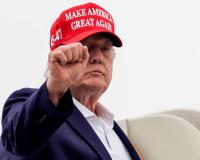
Trump denied claims that he had instructed Vance to begin peace negotiations with Iran. When journalists questioned him about the matter at Joint Base Andrews, the president said Iran needed medical supplies.
“Basically, it is about getting supplies to help people who are sick,” Trump said.
His remarks indicated that the reported contact was intended to facilitate the delivery of essential medical materials rather than initiate a diplomatic process to end the conflict.
The contrasting accounts have raised questions about the purpose of Vance’s outreach and whether Washington is exploring another diplomatic channel while continuing to consider military options.
Fresh Military Strikes on Iran Under Consideration After US Midterm Elections
The developments come as Trump is reportedly considering the possibility of another military attack on Iran after next week’s US midterm elections.
According to the report, Vance is attempting to determine whether diplomatic efforts could prevent the conflict from escalating into another round of military action.
However, no detailed peace proposal has emerged from the latest efforts.
Last week, Rezaei said Tehran would not negotiate with Washington until Iran’s fundamental demands were met.
Earlier Attempts to Reach a Peace Agreement Failed
According to the report, Vance has publicly supported the war but privately expressed concerns about allowing the conflict to continue for an extended period.
Before Trump launched Operation Epic Fury in February, Vance had advocated broader diplomatic efforts.
The president subsequently appointed him as the chief negotiator.
Vance then made two international trips to hold discussions with Iranian representatives in an effort to end the conflict.
In June, the two sides prepared a memorandum of understanding. However, the arrangement collapsed just two weeks after it was signed.
The main reason was a disagreement over the interpretation of provisions concerning the restoration of maritime traffic through the Strait of Hormuz.
Subsequent negotiations mediated by Qatar and Pakistan also failed to resolve the deadlock.
Nuclear Programme and Economic Sanctions Remain Key Obstacles
The United States wants Iran to make concessions on its nuclear programme as the first step towards an agreement.
Iran, meanwhile, is demanding immediate economic relief.
Rezaei’s emergence as a prominent negotiator could change the dynamics of the negotiations and potentially affect the roles of Iranian Foreign Minister Abbas Araghchi and Parliament Speaker Mohammad Bagher Ghalibaf.
Rezaei participated in the Iran-Iraq War during the 1980s and led the IRGC for several years.
Amid growing concerns over possible US attacks, his influence over Iran’s security policy has increased.
Earlier this month, he warned that Iran could target the United Arab Emirates, regional data centres and internet cables.
Trump Warns Iran Against Waiting Until US Elections End
While Trump has continued to discuss the possibility of a diplomatic agreement with Iran, he has also issued warnings about military action.
During his second term, ending Iran’s nuclear programme has remained one of his major national security priorities.
Last week, Trump said Washington was not negotiating with Tehran and also signalled the possibility of military action.
On Tuesday, during an election event, Trump accused Iran of deliberately prolonging the process of reaching an agreement.
He warned that waiting until the US elections were over would not benefit Iran.
The United States is scheduled to hold its midterm elections on November 3.
The war and rising fuel prices have emerged as major concerns among voters, making the ongoing conflict with Iran a significant issue in domestic politics.
Vance’s Diplomatic Initiative Also Carries Political Significance
Vance is among the early contenders being considered as a potential Republican presidential candidate for 2028.
His diplomatic initiative concerning Iran is therefore linked not only to US foreign policy but also to domestic political challenges.
Trump has already said that he alone will decide when the war with Iran ends.
As Washington weighs another possible military strike against Tehran while reportedly exploring diplomatic contacts, the latest outreach to Rezaei highlights the uncertainty surrounding the future of US-Iran relations and the possibility of renewed negotiations.
About The Author








Comment List