

In a landmark 2017 judgment, the Supreme Court unanimously declared privacy as an intrinsic part of the Right to Life and Personal Liberty under Article 21 of the Constitution. The ruling established the proportionality test, stating that any state surveillance measure must be lawful, necessary, and proportionate to the objective it seeks to achieve.
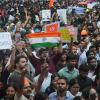
The petition filed before the Delhi High Court by former Jawaharlal Nehru University Students' Union president Aishe Ghosh claimed that since the beginning of the Cockroach Janta Party protest at Jantar Mantar on June 20, protesters have been subjected to continuous photography, videography, and round-the-clock monitoring through a permanent surveillance tower.
The petition alleged that the monitoring extended beyond recording the protest and captured personal activities of demonstrators, including eating, resting, seeking medical assistance, and other routine aspects of daily life. The protest has been organised over alleged examination paper leaks and demands for the resignation of Union Minister Dharmendra Pradhan.
Aishe Ghosh further claimed that women protesters were photographed and recorded even during rainfall when their clothes were drenched.
During the hearing on Monday, a bench comprising Delhi High Court Chief Justice DK Upadhyaya and Justice Tejas Karia questioned the Delhi Police on whether it had followed the Supreme Court directions related to surveillance.
"Did the Delhi Police follow those directions?" the bench asked Solicitor General Tushar Mehta.
Mehta stated that there had been no surveillance. He argued that protests at Jantar Mantar are routinely recorded and that the recording in this case was only for maintaining law and order.
"At Jantar Mantar, every protest is always recorded. In this protest, a hundred people are seen making videos and reels. This is only for the purpose of law and order. There is no surveillance," he said.
The Delhi High Court bench subsequently listed the matter for further hearing on Tuesday.
"Be ready, we will hear this plea tomorrow," the bench said.
The case has brought renewed focus on the legal limits of state monitoring during public demonstrations and the requirement to balance law enforcement needs with constitutional protections of privacy and personal liberty.
About The Author








Comment List