

Punjab is home to more than 10,678,138 Hindus, accounting for 38.49 per cent of the electorate. Political observers note that despite their numerical strength, Hindu voters in the state have consistently resisted attempts at religious polarisation. Their political preferences have historically been shaped by local issues, caste dynamics, regional identity, and governance rather than rigid religious affiliations. Punjabi remains the mother tongue of most Hindus in the state, further distinguishing them from Hindu communities elsewhere in the country.
The 2022 Punjab Assembly elections demonstrated this trend when the Aam Aadmi Party secured overwhelming support in Hindu-majority constituencies despite the nationwide momentum surrounding the Ram Temple issue. Of the 22 Hindu-stronghold Assembly constituencies, the Aam Aadmi Party won 15 seats, while the Congress secured five and the Bharatiya Janata Party won two.
Although political leaders, with the exception of hardline groups, publicly maintain that they do not distinguish between Hindu and Sikh voters, electoral strategies suggest otherwise. Over the years, political parties have adopted different approaches to attract Hindu voters while attempting to preserve Punjab’s delicate social balance.
In 2013, the then Chief Minister, the late Parkash Singh Badal, announced the construction of a memorial dedicated to the three Hindu martyrs, Mati Das, Sati Das, and Dyal Das. However, the project never progressed beyond the announcement stage.
Charanjeet Singh Brar, former Secretary to Shiromani Akali Dal President Sukhbir Badal and now a member of the Bharatiya Janata Party, said the previous Shiromani Akali Dal-Bharatiya Janata Party government had established a Bhagwan Parshuram Chair for Indian Culture and Literature at Punjabi University in Patiala and had also declared a public holiday on the birth anniversary of Lord Parshuram, which continues to remain in force.
Amid the Bharatiya Janata Party’s renewed focus on Punjab and allegations of sacrilege directed at Chief Minister Bhagwant Mann, Aam Aadmi Party National Convenor Arvind Kejriwal recently announced the construction of a Mata Janaki temple in Amritsar. The announcement is widely being viewed as an effort to strengthen support among Hindu voters.
Despite being recognised nationally as a right-wing political party associated with Hindu nationalism, the Bharatiya Janata Party has not announced any major initiative specifically targeted at the Hindu community in Punjab. Instead, alongside infrastructure projects involving railways and highways worth thousands of crores of rupees, the party has concentrated significantly on outreach to Sikh voters.
During a recent public address, Prime Minister Narendra Modi highlighted several initiatives undertaken for the Sikh community. These included facilitating the return of sacred copies of the Guru Granth Sahib from Afghanistan, installing the 300-year-old sacred footwear of Guru Gobind Singh and Mata Sahib Kaur at Takht Sri Patna Sahib, approving the Hemkund Sahib Ropeway project, granting Foreign Contribution Regulation Act clearance to the Golden Temple, and declaring December 26 as Veer Bal Diwas to honour the courage and sacrifice of the four sons of Guru Gobind Singh.
Political analysts argue that Punjab’s Hindu electorate cannot be viewed as a single, unified voting bloc because it is divided by caste and geographical factors. Upper-caste Hindus account for nearly 20 per cent of the population and are largely concentrated in urban areas. Dalit and Other Backward Class Hindus together constitute approximately 18 to 19 per cent of the electorate and predominantly reside in rural and semi-urban regions.
Electoral trends from the previous four Assembly elections indicate that Hindu voting behaviour in Punjab has remained fluid rather than ideologically fixed. The community has shifted its support from the Congress to the Shiromani Akali Dal-Bharatiya Janata Party alliance in different elections before backing the Aam Aadmi Party in 2022.
Although the Bharatiya Janata Party increased its vote share from 9 per cent in the 2019 Lok Sabha elections to 18 per cent in the 2024 Lok Sabha elections, it failed to win a single parliamentary seat in Punjab. Seeking to broaden its political appeal, the party recently appointed Kewal Singh Dhillon, a prominent Jat Sikh leader, as its Punjab state president.
Professor Pramod Kumar, Chairman of the Institute for Development and Communication at Panjab University in Chandigarh, said Punjabi Hindus possess a fluid religious identity that makes communal polarisation ineffective. He said Hindu voters in Punjab not only practice Hinduism but also deeply respect Sikhism, regularly visit Gurdwaras, and maintain strong connections with numerous regional spiritual sects, making attempts to create religious divisions politically unsuccessful.
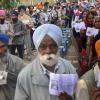
Punjab Bharatiya Janata Party General Secretary Anil Sarin echoed similar views, stating that Sikhs and Hindus are not viewed separately in Punjab because both communities identify themselves primarily as Punjabis. He noted that many Punjabi Hindu families traditionally wear turbans and recalled that his own father also wore one. According to him, Punjab has historically not experienced a Hindu-Sikh divide.
Referring to the political situation after the 2022 Assembly elections, Sarin claimed that voters from every community had been influenced by the Aam Aadmi Party’s promises, which he alleged were not fulfilled. He said people are now seeking political change and that the Bharatiya Janata Party is highlighting governance in neighbouring Haryana and Uttar Pradesh, particularly improvements in law and order and action against organised crime, while presenting itself as an alternative to both the Congress and the Aam Aadmi Party.
Former Cabinet Minister and senior Bharatiya Janata Party leader Lakshmi Kanta Chawla also rejected the idea that religious polarisation would benefit the party. She said the Shiromani Akali Dal tends to view Hindu voters differently from Sikhs, whereas almost every other political party, except Waris Punjab De led by Amritpal, includes both Hindu and Sikh leaders. According to Chawla, there is no need to distinguish between Hindus and Sikhs in Punjab because they remain part of the same social and cultural fabric.
Punjab’s political landscape continues to demonstrate that its Hindu electorate is shaped more by shared regional identity, caste composition, governance concerns, and centuries-old interfaith traditions than by religious divisions. As political parties prepare for future electoral contests, winning the confidence of this diverse and independent-minded voter base is expected to remain one of the state’s most complex political challenges.
About The Author





.jpg)




Comment List