

Before arriving in India, Dipke was largely unknown in the public sphere. His available profile remains limited to a childhood in Maharashtra, a brief association with the Aam Aadmi Party, a reported degree in public relations from Boston, and a high-profile reception upon his arrival in the country. While he quickly gained a loyal following through the Cockroach Janta Party movement, many supporters admitted they knew little about his political ideology, funding sources, or long-term objectives.
The movement highlighted an unusual contrast with previous political mobilisations in India. The country already has several established opposition leaders, including Omar Abdullah, Udayanidhi Stalin, Sachin Pilot, and Rahul Gandhi, all of whom possess years of documented political activity, public positions, and electoral experience. Regardless of political differences, their records and ideological positions remain publicly available. In contrast, Dipke emerged as the face of a nationwide protest despite widespread uncertainty surrounding his background, leadership credentials, and organisational support.
Questions also surfaced regarding the financial backing of the movement. Many participants acknowledged they did not know how the protests were funded or organised. According to accounts from supporters, logistical arrangements, including food distribution, continued without public disclosure of funding sources, while few participants sought clarification about the financial structure behind the campaign.
Observers drew comparisons with the anti-corruption movement of 2011, which featured established public figures including Anna Hazare, Arvind Kejriwal, Kiran Bedi, Prashant Bhushan, and Yogendra Yadav. Each entered public mobilisation with identifiable achievements, recognised public service, or documented activism. Dipke, however, arrived without a comparable public record, leading to suggestions that he sought legitimacy through his association with Sonam Wangchuk, whose hunger strike brought additional credibility and stability to the protest movement.
The movement reflected broader concerns regarding political representation among India's younger population. While approximately 43 percent of voters supported the National Democratic Alliance during the 2024 General Election, the remaining electorate was represented in Parliament by the Leader of the Opposition, Rahul Gandhi. Although the Prime Minister governs the entire nation regardless of electoral preferences, the protests prompted questions over whether the opposition had effectively represented the concerns of young citizens dissatisfied with government policies.
According to the narrative surrounding the movement, the protests began as a response to alleged government failures but continued because many young people felt the opposition had failed to become their primary political voice. Despite Rahul Gandhi's continued engagement with students through university visits and public interactions, large numbers of young protesters instead rallied behind a leader whose political experience remained largely undocumented.
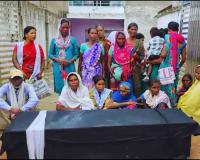
The protests were characterised by widespread public grievances but lacked a clearly defined ideological direction. Dipke capitalised on public dissatisfaction by providing an organisational platform while using images of deceased children connected to the National Eligibility-cum-Entrance Test controversy to generate public sympathy, even as affected students prepared for the scheduled re-examination. Critics argued that the movement reflected the political instincts of a leader capable of transforming public tragedy into political mobilisation.
The government's handling of the protests also came under scrutiny. Authorities largely allowed demonstrations to continue, creating space for multiple groups with different grievances to participate simultaneously. As competing demands and differing political perspectives converged, the movement increasingly reflected a broad coalition of dissatisfaction without a unified ideological framework or clearly defined objectives.
The developments prompted comparisons with political unrest in neighbouring countries. Reference was made to Sri Lanka in 2022, Bangladesh in 2024, and Nepal in 2025, where public frustration over corruption, unemployment, and governance escalated into widespread unrest. In Nepal, the ban on 26 social media platforms reportedly intensified long-standing public resentment, leading to violent demonstrations, the resignation of the Prime Minister, damage to Parliament, and the deaths of 74 people within five days. Subsequent protests by Nepal's younger generation reflected disappointment over unmet expectations following political change.
The article also highlighted concerns regarding foreign influence over digital information campaigns targeting India. Pakistan's Inter-Services Intelligence was cited as conducting operations intended to inflame communal tensions, while Bangladeshi elements were accused of attempting to deepen regional divisions. Meta also reportedly dismantled China-based networks of fake accounts posing as journalists, lawyers, and human rights activists that targeted India and Tibet through allegations of corruption against the Indian government. Another China-linked operation allegedly promoted a fictitious activist movement accompanied by calls for demonstrations abroad. Although these campaigns were reportedly identified early, concerns remain that future operations could become increasingly sophisticated.
The discussion extended to the government's responsibility to maintain public confidence in democratic institutions. Concerns were raised over the perception of institutional capture, frequent political defections, and repeated allegations regarding the alleged misuse of the Enforcement Directorate, the Central Bureau of Investigation, and the Election Commission. While such allegations may remain disputed, it was argued that the absence of effective responses could strengthen public perceptions of institutional bias, particularly among younger citizens seeking political accountability.
Abhijeet Dipke's long-term political future remains uncertain. He could emerge as a significant national political figure, remain a temporary public phenomenon, or transition into mainstream politics. Regardless of his personal trajectory, the movement highlighted a broader challenge confronting India's political system: millions of young citizens with genuine grievances who continue searching for effective political representation.
The debate unfolded at a time when India was also witnessing major technological and national achievements, including the launch of a rocket by a private company, the introduction of a hydrogen-powered railway engine, and the successful return of PV Sindhu to competitive prominence. As the country advances across multiple sectors, the movement underscored the importance of maintaining public trust, strengthening democratic institutions, and ensuring that legitimate public grievances are addressed before they become vulnerable to domestic or foreign exploitation.
About The Author







Comment List