

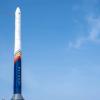
Prime Minister Narendra Modi congratulated Skyroot Aerospace following the successful launch of the privately developed orbital rocket. The achievement marks a major step for India’s private space sector, as Vikram-1 completed its final burn and successfully injected its payloads into a nearly 450-kilometre orbit, making India the third country in the world to achieve private orbital launch capability.
The mission, named “Mission Aagaman,” was carried out from the Satish Dhawan Space Centre. The 24-metre carbon-composite rocket successfully completed all planned flight stages, including stage separations and the activation of its Orbital Adjustment Module (OAM), demonstrating the precision and reliability of the launch system.
The Orbital Adjustment Module played a crucial role in the final phase of the mission by firing its 3D-printed liquid engine to provide the final thrust required to achieve orbit. The module has been designed with advanced capabilities that allow it to start, stop, and restart operations while in space.
During the flight, the Kalam-1200 solid first stage carried Vikram-1 through the densest layers of the atmosphere before separating successfully. The payload fairing was then separated, exposing the onboard satellites to the space environment for the first time.
The second stage, Kalam-250, completed its burn and separated as planned, followed by the ignition of Kalam-100, the smallest and highest-flying solid stage of Vikram-1. The solid propulsion phase concluded with the separation of the third stage, allowing the Orbital Adjustment Module to complete the final mission objectives.
Powered by three solid-fuel stages and a liquid orbital adjustment module, Vikram-1 has been designed to deploy payloads weighing up to 350 kilograms into a 450-kilometre Low Earth Orbit. The successful mission demonstrated the capability of India’s private space industry to develop and operate advanced orbital launch systems.
The maiden flight carried multiple payloads, including the “Diamond Lotus,” a lab-grown diamond developed by Bengaluru-based Cosmos Diamonds. The payloads represented a combination of scientific innovation, private sector participation, and contributions from individuals and organisations connected with India’s growing space ecosystem.
Mission Aagaman and the successful orbital deployment of Vikram-1 mark a significant milestone in India’s space journey, highlighting the expanding role of private enterprises in the country’s space exploration efforts and opening new possibilities for commercial orbital missions in the future.
About The Author










Comment List