

Crocodiles are considered among the world's most dangerous and powerful predators due to their powerful jaws, razor-sharp teeth, and exceptional hunting abilities. For that reason, people generally expect to see them only in rivers, forests, or zoological parks. The appearance of what appears to be a crocodile on top of a moving vehicle has therefore attracted significant attention across social media platforms.
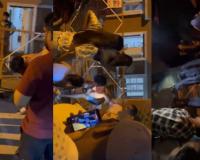
In the viral video, an auto-rickshaw is seen travelling along a road, appearing completely ordinary at first. However, as the camera focuses on the roof of the vehicle, a large reptile resembling a crocodile can be seen secured to the top. The individual recording the video also appears surprised by the unusual sight. The clip has been widely shared on social media with the caption, "India Is Not for Beginners," helping it reach millions of viewers within a short period and prompting extensive sharing online.
Despite the video's popularity, its authenticity has not been independently verified. It remains unclear whether the footage captures a real incident, was created as a prank or stunt, or was digitally manipulated using editing software. As a result, the clip has generated mixed reactions across social media.
Some users believe the footage appears completely authentic, while others argue that advances in artificial intelligence and digital editing make it easy to create convincing fabricated videos. The comment sections have been filled with reactions ranging from shock and amusement to skepticism.
Several social media users have also urged others not to accept viral content as factual without proper verification. At present, there is no confirmed evidence establishing the authenticity of the video. Until it is verified by a credible source, the footage should be treated only as a viral social media video rather than a confirmed incident. The uncertainty surrounding its authenticity continues to fuel public discussion and online curiosity.
About The Author









Comment List