

The roots of this parallel economy trace back to the National Socialist Council of Nagalim (Isak-Muivah), commonly known as NSCN(IM), an armed organisation formed after a split in 1988 from the original NSCN. The parent organisation itself emerged from leaders who rejected the 1975 Shillong Accord and continued pursuing the demand for a sovereign “Greater Nagalim”, an envisioned territory extending beyond Nagaland into Naga-dominated hill districts of Manipur, including Ukhrul, Senapati, Tamenglong and Chandel.
Maintaining an armed movement requires substantial financial resources, and NSCN(IM) developed a system of forced collections presented as a form of governance. The group established the name “Government of the People’s Republic of Nagalim” (GPRN) and described its collections as “taxes”. However, investigators, including the Enforcement Directorate, and independent researchers who have studied the organisation have classified these activities as extortion.
The collection system affected ordinary residents and businesses across the hills. Families were subjected to house taxes, government employees faced deductions from salaries in areas influenced by the group, and businesses, contractors, truck operators and traders were forced to pay what was described as ration money or other compulsory contributions.
Researchers have consistently identified two major sources of income for insurgent groups in the region — extortion and the narcotics trade.
By December 2022, the alleged illegal taxation network moved from being widely reported as an open secret to becoming part of a formal legal investigation. The Enforcement Directorate charged the NSCN(IM) treasurer with illegal tax collection, officially recognising the existence of a financial system that had operated openly in the hills for years.
The August 1997 ceasefire agreement between the Government of India and NSCN(IM) was intended to create a pathway towards a permanent political settlement. However, nearly three decades later and more than a decade after the 2015 Framework Agreement, a final resolution remains pending. During this period, the organisation has developed a parallel administrative structure across several hill regions.
Under the ceasefire arrangement, insurgent cadres are required to remain within designated camps. However, security forces have repeatedly conducted operations against suspected hideouts outside these locations. The Indian Army has carried out raids in areas such as Kekru Naga village and along the India-Myanmar border based on intelligence regarding extortion activities allegedly conducted beyond designated camps.
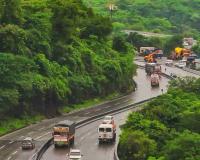
The impact of this underground financial network has been particularly visible along National Highway 2, the Imphal-Dimapur route that serves as a crucial economic lifeline for Manipur. For years, transport operators travelling along the highway have allegedly been forced to pay unofficial charges. Trucks obtained prepaid slips in Dimapur, Nagaland, and stopped at checkpoints along the highway to make payments.
Drivers refusing to comply with these demands have reportedly faced physical attacks, while vehicles have also been targeted with arson. Government officials have not remained unaffected. The Ukhrul Deputy Commissioner was forced to leave for the state capital Imphal after proposing action against the extortion network.
The financial burden created by these collections has affected the wider economy, contributing to increased costs in Imphal Valley, restricting development resources from reaching hill areas and strengthening the perception that armed groups, rather than legal institutions, control economic activity.
NSCN(IM) established a model of insurgent financing that was later adopted by several other armed groups operating in Manipur. While a significant portion of the funds collected reportedly remained within NSCN(IM)-controlled areas, some resources were shared with allied armed organisations, helping create a broader insurgency-based financial network.
Valley-based armed groups and splinter factions later adopted similar methods, imposing their own forms of illegal taxation, carrying out kidnappings over non-payment and disrupting markets as a means of pressure. Years before the ethnic violence of May 2023, the normalisation of extortion as a substitute for governance had already weakened public trust in government institutions.
Several insurgent groups have also been accused of coordinating operations. A National Investigation Agency chargesheet filed in March 2025 alleged that a China-Myanmar-based NSCN(IM) network assisted in moving cadres of the People’s Liberation Army and Kanglei Yawol Kanna Lup into Manipur to exploit ethnic tensions and further destabilise the state. The People’s Liberation Army and Kanglei Yawol Kanna Lup are insurgent organisations associated with the Meitei community.
The nearly two dozen Kuki insurgent groups operating under the Suspension of Operations agreement have also faced repeated allegations of extortion and intimidation. These groups function under two umbrella organisations — the Kuki National Organisation and the United People’s Front — which represent the various groups that signed the agreement.
The Imphal-Dimapur highway passes through several villages located close to designated camps of Kuki armed groups. These groups have been accused of collecting illegal payments from transporters. Police personnel in Kangpokpi have also reportedly received extortion demands, indicating the extent to which armed groups have allegedly penetrated local systems by exploiting ceasefire arrangements.
The cross-border networks developed over decades for movement of money, weapons and narcotics have continued to influence Manipur’s conflict economy. These routes connect the state with Myanmar’s Sagaing region and have been linked to the circulation of arms, profits from the Golden Triangle drug trade and the establishment of safe locations across the border.
The conflict in Manipur cannot be understood only through the lens of Meitei and Kuki tensions. Beneath the ethnic divide exists a decades-old insurgent economy built on extortion, illegal taxation and cross-border networks. This system has financed rival armed groups, created parallel structures of authority in the hills and gradually weakened public confidence in formal governance.
Within Naga civil society, increasing voices have emerged against the continuation of extortion practices carried out in the name of nationalism, calling for an end to the misuse of political movements for financial gain.
A lasting solution in Manipur requires dismantling the financial foundations of armed groups. This includes closing all unauthorised camps, conducting financial investigations to identify and block revenue sources, protecting highway trade and restructuring ceasefire arrangements so that illegal collections cannot continue as an accepted practice.
The same weapons used to collect illegal payments today continue to fuel violence tomorrow. Addressing Manipur’s crisis requires action on its highways, within its hill regions and through financial scrutiny of the structures that have sustained the underground economy for decades.
About The Author










Comment List