

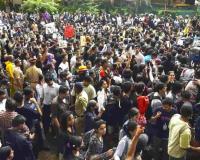
The revised approach comes after prolonged demonstrations at key locations including Shivaji Park, Chembur, and Azad Maidan. Instead of relying on traditional methods such as baton charges or the use of tear gas shells, Mumbai Police has decided to closely monitor protesters through digital tools aimed at tracking their movements and ensuring compliance with ongoing investigations.
Under the new strategy, students who have been detained or identified as suspected participants in the protests are being instructed to continuously share their live GPS location through WhatsApp. According to the police, the objective is to monitor their movements and maintain real-time information about their whereabouts. In addition, legal notices are being served directly through WhatsApp under Section 35(3) of the Bharatiya Nagarik Suraksha Sanhita, directing the students to appear immediately before investigating officers.
The police initiative extends beyond digital surveillance. Police personnel are visiting the homes of students to meet their family members, informing them about the ongoing investigation and advising them to prevent their children from participating in rallies. At the same time, police officers have been deployed outside metro stations and railway stations across Mumbai. Information relating to students who were previously detained has also been circulated among all police stations so that they can be identified during transit and sent back before reaching protest sites.
Mumbai Police has defended the measures by stating that the initiative is intended to protect students rather than impose excessive restrictions. According to the police, preventing young people from becoming involved in criminal cases is essential because the registration of a criminal case could create long-term difficulties in obtaining passports, securing admission to educational institutions, and finding employment. The authorities maintain that the strategy is designed to safeguard the future of students while maintaining public order.
However, lawyers representing the protesters have strongly challenged the police action. They argue that the measures extend far beyond established policing protocols and amount to an infringement of an individual's right to privacy as well as the constitutional freedom to move freely. According to the defense, the continuous digital monitoring and movement restrictions raise serious concerns regarding civil liberties during the handling of student protests.
The adoption of digital surveillance in place of conventional crowd-control methods marks a significant shift in policing strategy during the ongoing protests linked to the NEET examination paper leak. While Mumbai Police maintains that the measures are intended to protect students and prevent long-term legal consequences, the controversy has also triggered an intense debate over the balance between public security, individual privacy, and constitutional freedoms.
About The Author









Comment List