

According to news agency PTI, police took custody of the body and began an investigation.
According to BBC associate journalist Asif Ali, Koli's body was found in the Saptarishi/Bhupatwala area of northern Haridwar. Haridwar City CO Shishupal Singh Negi said, "A person's body has been found in the Saptarishi area. Information has been received that the deceased's name is Surendra Koli. Prima facie, the case appears to be suicide. The FSL team is investigating at the spot and the post-mortem of the body will be conducted by a panel of doctors."
According to police, after his release, Surinder Koli had set up a small shop in Haridwar and was running a tea stall. After the incident, a forensic team collected evidence from the spot. However, no suicide note was recovered.
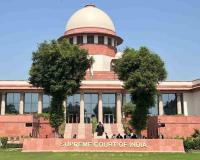
Koli's death comes after the Supreme Court had found that the evidence on the basis of which lower courts had convicted and sentenced him was legally invalid, unreliable and contradictory.
Moninder Singh Pandher, who was another accused in the case, had already been acquitted by the court.
In Noida's Sector 31, only four families of the children who were victims in the Nithari case remain. Most families have turned away from both the village and the legal battle.
Moninder Pandher and Surinder Koli were sentenced to death in 2009 by a CBI court in Ghaziabad in cases involving rape, murder, destruction of evidence and other charges.
Koli was the sole accused in 11 cases, while he was made a co-accused with Pandher in two cases.
In 2023, the Allahabad High Court acquitted Koli in 12 cases connected with the matter. Pandher was also found not guilty in the two cases registered against him.
In its judgment, the High Court said the investigation had been conducted poorly and that "the basic standards of collection of evidence were openly violated."
Lawyer Paras Nath Singh had said about the court's decision, "There was no circumstantial evidence in this case. Therefore, the confessions of Koli recorded by the CBI were not considered reliable by the court. Under the law, a confession must be voluntary and should not be made under fear or pressure."
Page 47 of the 308-page copy of the Allahabad High Court judgment states that Koli remained in police custody for 60 days, but was never medically examined during those 60 days, leaving doubts about the possibility of physical torture. The judgment noted that only a medical certificate from 2007 was produced, and the doctor was not presented as a witness to establish its credibility.
The judgment also stated that the magistrate before whom Koli's alleged confessions were recorded did not express satisfaction that the statements had been made without pressure from anyone.
The High Court highlighted that the prosecution repeatedly changed its stand during the proceedings.
The initial case had been registered against Koli and Moninder Pandher, the owner of house number D-5. Both were held responsible for the items recovered from the spot.
Over time, however, Koli alone began to be held responsible for everything. The prosecution's evidence also changed at different stages of the investigation, and eventually Koli's confession became the sole basis, despite questions surrounding its reliability.
On November 11, 2025, while delivering its verdict in the last case pending against Koli, a bench headed by Chief Justice of India BR Gavai said, "The evidence which the court had already found insufficient and unreliable while acquitting Koli in 12 cases cannot constitutionally justify maintaining his conviction in one case."
The court acknowledged that the crimes committed in Nithari were extremely disturbing and that the suffering of families who lost their children could not be expressed in words. However, even after such a prolonged investigation, the identity of the actual perpetrator could not be established with conclusive evidence.
The court said, "The law cannot convict anyone merely on the basis of suspicion. No matter how strong the suspicion, the court requires concrete evidence. The court made it clear that legal rules cannot be disregarded under pressure to deliver justice."
The court also questioned the investigation process followed by police and the agencies.
It said, "If an investigation is conducted on time, professionally and in accordance with the Constitution, the truth can emerge even in the most difficult cases. But that did not happen in the Nithari case. Negligence and delay weakened the entire investigation and also closed the avenues that could have led to the real perpetrator."
The result was that Moninder Singh Pandher and Surinder Koli were found not guilty in all the cases and were released.
Between 2005 and 2006, several children and young women went missing one after another in Nithari village in Noida, adjoining Delhi.
The families of the missing children and girls lodged complaints related to the cases at the local police station, but police faced allegations of ignoring the complaints for months.
Eventually, when police began investigating, 19 skeletons were recovered from a drain behind Pandher's house. Moninder Singh Pandher and Surinder Koli were arrested.
The case was transferred to the CBI. During its investigation, the agency recovered parts of human bones and 40 packets containing human body parts that had been thrown into the drain.
The investigation continued, and in 2009, a CBI court in Ghaziabad sentenced both men to death in one of the cases.
The case later moved from the Allahabad High Court to the Supreme Court, where the court's decision ultimately resulted in both accused being found not guilty.
About The Author










Comment List