Aditya-L1 Completes First Year of Solar Observations, SUIT Captures Sun's Explosive Activity

Aditya-L1 Completes First Year of Solar Observations, SUIT Captures Sun's Explosive Activity

Aditya-L1 has completed its first year of SUIT observations, recording solar flares and features of the Sun's lower atmosphere. A new research paper reveals how the instrument operated and what scientists observed.


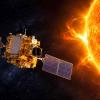
India's Aditya-L1 solar mission has completed its first year of observations with the Solar Ultraviolet Imaging Telescope (SUIT), providing scientists with valuable insights into the Sun's lower atmosphere and its explosive activity, including solar flares. A research paper documenting the instrument's performance has detailed how it was operated, calibrated and maintained while recording important solar features and events during the period.

The study, titled 'Unraveling the Secrets of the Lower Solar Atmosphere: One Year of Operation of the Solar Ultraviolet Imaging Telescope (SUIT) on board Aditya-L1', was led by Rahul Gopalakrishnan and a team of researchers. It examines the telescope's operational performance and the scientific observations collected during its first year.

Aditya-L1 was launched by the Indian Space Research Organisation (ISRO) on September 2, 2023, becoming India's first dedicated space-based solar observatory. The spacecraft reached its designated halo orbit around the Sun-Earth Lagrange Point 1 (L1) on January 6, 2024, at a distance of approximately 1.5 million kilometres from Earth.

Its position at L1 provides a largely uninterrupted view of the Sun, without the regular interruptions caused by Earth's shadow or eclipses. The mission aims to help scientists understand how the Sun's outer atmosphere is heated, how solar flares and massive eruptions of material originate, and how these activities influence space weather. Such disturbances can potentially affect satellites, communication networks and power systems on Earth.

Read More Prema Rawat Smashes Women’s T20 World Record With 14-Ball Half-Century

SUIT is one of the seven scientific instruments aboard Aditya-L1. It captures images of the Sun in near-ultraviolet light, covering wavelengths between 200 and 400 nanometres. These observations allow researchers to examine solar features that are not easily studied through visible-light imaging.

Read More New Samvat 2026: AMFI Chief Reveals Why Staying Invested Matters More Than Timing

The instrument was switched on November 20, 2023, and captured its first scientific images on December 6, while the spacecraft was still travelling towards L1. Its ultraviolet observations provide insights into the Sun's photosphere and chromosphere, two atmospheric layers that offer important clues about solar activity.

Read More Prashant Kishor Warns BJP Cannot Save Banshidhar Brijwasi, Rahul Raj from Disqualification

The research paper documents SUIT's calibration, routine maintenance, operating procedures and observations throughout its first year. It also highlights notable solar features and events recorded by the instrument during this period.

Studying activity in the Sun's lower atmosphere is important for understanding how solar disturbances develop and evolve into larger eruptions. By tracing these processes, scientists can gain a better understanding of solar activity and its potential influence on space weather, including the risks posed to technology operating around Earth.

With a planned mission life of five years, Aditya-L1 will continue collecting solar observations through its seven scientific instruments. The data gathered over the mission's operational period is expected to help scientists develop a more comprehensive understanding of the Sun, its atmospheric activity and its influence on Earth's space environment.

Tags:

About The Author

Post Comment

Comment List

Latest News

Government Plans to Give TRAI Direct Powers to Penalise Telecom Companies Over Spam Calls Government Plans to Give TRAI Direct Powers to Penalise Telecom Companies Over Spam Calls
The Centre is considering granting TRAI direct powers to penalise telecom companies over spam calls and unsolicited messages as complaints...
Potassium-Enriched Salt Could Prevent 4 Lakh Deaths Annually in India, Study Finds
Aditya-L1 Completes First Year of Solar Observations, SUIT Captures Sun's Explosive Activity

Live Cricket Score

Advertisement

Science & Tech

India's October 2026 Car Sales: Kia Overtakes Toyota to Enter Top Five India's October 2026 Car Sales: Kia Overtakes Toyota to Enter Top Five
India's October 2026 car sales reveal a major change in the automaker rankings as Kia overtakes Toyota. Check FADA sales...
Samsung Galaxy S27 Ultra Dummy Reveals Camera Redesign and MagSafe Compatibility

Health

Potassium-Enriched Salt Could Prevent 4 Lakh Deaths Annually in India, Study Finds Potassium-Enriched Salt Could Prevent 4 Lakh Deaths Annually in India, Study Finds
A study covering 193 countries estimates that potassium-enriched salt could prevent four lakh deaths annually in India. Researchers also highlight...
Kidney Injury Before ECMO Linked to Higher ICU Deaths, Study Finds

Lifestyle

Exercise Training May Help Manage Diabetic Cardiomyopathy, Review Finds Exercise Training May Help Manage Diabetic Cardiomyopathy, Review Finds
Exercise training could help manage diabetic cardiomyopathy by improving fitness, insulin sensitivity and selected heart function measures. However, a new...
Going to Bed Earlier May Help People With Prediabetes Lose More Weight, Study Finds
crossorigin="anonymous">