

Advances in particle colliders, including CERN's Large Hadron Collider (LHC), are allowing researchers to investigate the structure of matter at unprecedented levels of precision. Known as the zeptoverse, this largely unexplored domain could contain undiscovered particles or forces operating at zeptometer scales, thousands of trillions of times thinner than a human hair. It may also reveal quantum processes that shape the cosmos over unimaginably short periods.
After more than 40 years of research, scientists have reported experimental evidence of an exceptionally rare and unstable type of particle decay, bringing them closer to investigating this elusive domain.
The LHCb Collaboration announced the findings during a seminar on November 3rd and in a preprint paper published on arXiv under the title associated with DOI 10.48550/arXiv.2611.00230. The paper has not yet undergone peer review.
The phenomenon is believed to occur only once in every ten billion events involving the decay of a particular type of beauty particle, making it an extraordinarily rare process. The potential discovery, alongside a significantly more precise measurement of a related decay, offers a new way to test existing particle physics theories and investigate possible new physics.
"This is a powerful new test of the Standard Model and a window into potential new physics," explained Niladri Sahoo, a particle physicist at the University of Birmingham and convener of the LHCb Very Rare Decays working group.
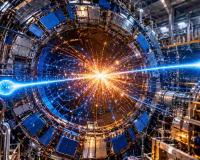
The research was conducted using the Large Hadron Collider Beauty (LHCb) experiment, one of the particle-hunting projects located along CERN's underground Large Hadron Collider.
Researchers have been searching for evidence of this rare decay since the 1980s. Recent improvements to the LHCb experiment have increased its particle collision detection rate, allowing scientists to investigate increasingly uncommon particle interactions. Machine learning techniques have also helped improve the signal-to-noise ratio, making it easier to distinguish potential discoveries from background events that previously complicated observations.
The LHCb detector uses specialised instruments, including its VELO sub-detector, to track particle decays with exceptional precision. The detector is positioned less than a finger's width from the particle beam, allowing it to observe the wide range of exotic particles produced when particles collide at speeds approaching that of light.
The latest breakthrough involves potential evidence of a particle known as a Bd meson decaying into a muon and an anti-muon.
The Bd meson consists of two subatomic particles: a beauty quark and a down antiquark. Quarks exist in six flavours. Up and down quarks combine in groups of three to form protons and neutrons, while the remaining quarks play an important role in investigating the fundamental properties of the universe.
Beauty quarks were believed to be abundant in the extremely hot and dense conditions following the Big Bang, when the universe may have been just a hundredth of a billionth of a second old. They are not naturally present in the universe today.
To investigate the decay, researchers recreated beauty quarks inside the Large Hadron Collider. They first collided protons at nearly the speed of light, producing a temporary shower of particles that included beauty quarks and down antiquarks.
These particles rapidly combined through the strong nuclear force, which also holds quarks together inside protons and neutrons, forming mesons.
The resulting particles are extremely short-lived, decaying within approximately one and a half trillionths of a second. However, only one in every ten billion such beauty meson decays produces the specific outcome researchers are investigating: a muon and an anti-muon emerging from the quantum process while conserving energy and mass.
The muons produced in this process are also unstable. They survive for approximately two millionths of a second before decaying into other particles, including electrons and positrons.
Establishing evidence for such an exceptionally rare process requires a statistical significance of at least three standard deviations, commonly known as 3 sigma. This corresponds to a 0.3 per cent probability that the observed result is a statistical fluctuation rather than a genuine signal.
The latest analysis combines data collected by the LHCb experiment during 2024 and 2025 with earlier measurements gathered between 2011 and 2018. Together, the findings reach a statistical significance of 3.2 sigma, providing evidence for the rare decay.
However, the result has not yet reached the five-sigma threshold considered the gold standard for confirming a particle physics discovery. Further research and additional experimental data will be necessary to establish the decay conclusively.
Future upgrades planned for the 2030s are expected to increase the number of collisions at the LHC and raise its data collection rate by an order of magnitude, potentially allowing researchers to investigate the process with greater precision.
As the researchers stated in their preprint paper, "All results are consistent with [Standard Model] expectations and constrain new physics contributions at energy scales beyond those accessible through direct production at the LHC."
The findings are consistent with the Standard Model, the established theoretical framework explaining much of the universe's fundamental particles and their interactions. However, the model does not explain dark matter or the slight imbalance between normal matter and antimatter that prevented the universe from completely annihilating itself in an explosion of energy after the Big Bang.
The research also highlights how evidence of new physics may emerge without scientists directly producing an undiscovered particle inside a collider. Instead, previously unexplored particle decay rates and other indirect measurements could reveal the influence of new physical processes.
This approach has played a role in earlier discoveries involving the charm quark and the top quark. The top quark is the heaviest of all quarks, with a mass approximately equivalent to that of an entire gold atom.
Harry Cliff, a particle physicist at the University of Cambridge and leader of the analysis team, described the latest result as an important moment for the research community.
"Seeing clear evidence for this rarest decay for the first time was thrilling," he said.
"We're knocking on the door of the zeptoverse now. I can't wait to see what we find as we explore deeper."
Although further confirmation is required, the 3.2-sigma result represents an important step in the search for extremely rare particle interactions. With more sensitive experiments and larger datasets expected in the coming years, researchers hope to investigate processes that could eventually provide new insights into the fundamental structure and evolution of the universe.
About The Author








Comment List