

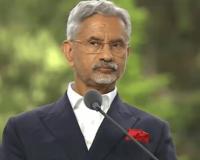
Addressing the XIV St Petersburg International Legal Forum, Justice Surya Kant emphasised that equal access to law must extend beyond procedural formalities and result in the actual conferment of rights. He said access to justice should not remain a procedural formality but must translate into meaningful rights rather than hollow statutory declarations.
Referring to the historical evolution of the concept of equality, the Chief Justice stated that its origins should not necessarily be traced to the Magna Carta, which was sealed by King John in 1215 and is widely regarded as establishing the principle that every individual, including the sovereign monarch, is subject to the law. Justice Surya Kant said that, in his personal view, the roots of equality could be found in Kautilya's Arthashastra, a Sanskrit treatise on statecraft written in the fourth century and attributed to Kautilya, the chief adviser to Mauryan Emperor Chandragupta Maurya.
Highlighting the constitutional framework of India, Justice Surya Kant said that the Constitution ushered in a new era by guaranteeing Fundamental Rights, including equality before the law, the right to live with dignity, and equal justice. However, he noted that the real challenge lay not in merely proclaiming these guarantees but in ensuring that they reached people across geographical distances, irrespective of economic and social disadvantages, language barriers, and cultural diversity.
The Chief Justice also addressed the broader international legal landscape, stating that many nations across the Global East and the Global South continue to build their legal and institutional frameworks while confronting the enduring effects of colonialism and the challenges of poverty.
Justice Surya Kant's remarks offered a significant historical and constitutional perspective on the evolution of equality, underscoring the importance of transforming legal guarantees into practical rights while drawing attention to the enduring relevance of ancient legal thought in contemporary constitutional discourse.
About The Author









Comment List