

Speaking at an event on Capitol Hill organised by the Foundation for India and Indian Diaspora Studies on Tuesday, United States Deputy Assistant Secretary of State Bethany Poulos Morrison said Prime Minister Narendra Modi and President Donald Trump were pursuing a result-oriented relationship focused on tangible outcomes rather than symbolic engagements.
"We are not measuring the relationship by meetings. We are measuring it by results," Morrison said while referring to the trade negotiations initiated after the understanding reached between Trump and Modi earlier this year. She stated that both countries are "very, very close" to finalising the long-awaited agreement.
According to Morrison, the proposed trade pact will open India's vast market to American products under reciprocal arrangements designed to benefit both nations. She said the administration is working with urgency towards the objective of "Mission 500", which aims to increase bilateral trade to 500 billion dollars by 2030.
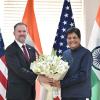
Her remarks came as United States Trade Representative Jamieson Greer visited India for discussions with Commerce and Industry Minister Piyush Goyal regarding the proposed agreement.
Highlighting growing economic cooperation, Morrison said Indian companies are increasing investments in the United States. During the recent SelectUSA Investment Summit, India announced investment commitments worth 20 billion dollars, including 1.1 billion dollars in immediate investments. She described it as the largest announcement in the history of the summit.
The United States remained India's second-largest trading partner during the 2025-26 financial year. India's exports to the United States rose marginally by 0.92 per cent to 87.3 billion dollars despite higher tariffs, while imports from the United States increased by 15.95 per cent to 52.9 billion dollars. Consequently, India's trade surplus narrowed to 34.4 billion dollars in 2025-26 from 40.89 billion dollars in 2024-25.
Morrison also highlighted the rapid expansion of the India-United States energy partnership. She said both countries are exchanging American oil, natural gas and coal, while exploring broader civil nuclear cooperation under the recently enacted Shanti Act. According to her, bilateral hydrocarbon trade has expanded significantly since 2025 and has reached 14.4 billion dollars.
She further noted that more than 330,000 Indian students are enrolled in educational institutions across the United States. Their contribution exceeds 14 billion dollars to the American economy and supports more than 50,000 jobs.
Meanwhile, Piyush Goyal and Jamieson Greer held high-level talks in New Delhi on Tuesday aimed at recalibrating and preserving the proposed Bilateral Trade Agreement after changes in United States tariff policies disrupted the framework negotiated earlier this year.
Both sides are seeking to finalise an interim agreement before July 24, when Washington's temporary 10 per cent tariff on imports from trading partners is scheduled to expire. Greer's two-day visit comes shortly after Prime Minister Modi and President Trump held their first meeting in more than a year during the G7 summit in France on June 17, providing fresh momentum to negotiations regarded as crucial for strengthening economic relations.
The meeting followed discussions between chief negotiators held in New Delhi from June 2 to June 4. Securing preferential tariff treatment has emerged as a key priority for India after changes in American tariff policy weakened the advantage New Delhi had expected over regional competitors such as Vietnam and other Association of Southeast Asian Nations economies.
Under the framework agreed in February, the United States had proposed reducing tariffs on Indian products to 18 per cent, lower than duties imposed on several competing exporters. However, a subsequent court ruling and Washington's decision to impose a temporary 10 per cent tariff on imports from all countries forced both sides to revisit major elements of the arrangement.
Earlier, on June 5, Piyush Goyal stated that India and the United States were moving towards resolving all outstanding issues and were likely to implement the first phase of the Bilateral Trade Agreement by the middle of next month.
Formal negotiations for the Bilateral Trade Agreement began on February 13, 2025. In February, both countries announced the contours of the first phase based on the 50 per cent tariffs imposed by the United States on Indian goods. However, on February 20, the United States Supreme Court struck down those sweeping tariffs, prompting the Trump administration to impose temporary 10 per cent tariffs under Section 122 of the Trade Act on all countries for 150 days beginning February 24. These measures are scheduled to expire on July 24.
Under the agreed framework, India proposed eliminating or reducing tariffs on all American industrial goods and a wide range of food and agricultural products, including dried distillers grains, red sorghum used for animal feed, tree nuts, fresh and processed fruits, soybean oil, wine, spirits and several additional products.
New Delhi has also indicated plans to purchase 500 billion dollars worth of American energy products, aircraft and aircraft components, precious metals, technology products and coking coal over the next five years.
As the tariff environment in the United States evolved, both countries began reassessing the structure of the agreement. The February joint statement contains a provision allowing either side to revise commitments if tariff structures change.
At the same time, the United States Trade Representative launched two Section 301 investigations on March 11 and March 12 covering nearly 60 economies. One investigation focused on allegations of excessive industrial capacity, while the other examined concerns regarding forced labour in global supply chains. India was included in both investigations.
When the first phase of the agreement was originally finalised, India enjoyed a comparative advantage over competing economies including members of the Association of Southeast Asian Nations, as well as Sri Lanka, Pakistan and Bangladesh. However, changing tariff dynamics have compelled both nations to revisit critical provisions as they move closer to a landmark trade agreement that could redefine economic engagement between New Delhi and Washington and accelerate efforts to achieve 500 billion dollars in bilateral trade by 2030.
About The Author

.jpg)








Comment List