
.jpg)
During the hearing, Justice Dipankar Datta drew a comparison between the appointment process of the Central Bureau of Investigation Director and that of the country’s top election officials. The judge pointed out that the Chief Justice of India is part of the committee that selects the Central Bureau of Investigation Director, but has no role in the panel responsible for appointing the Chief Election Commissioner and Election Commissioners.
“What about democracy?” Justice Datta asked while addressing the court. He observed that if the Chief Justice of India could be included in the selection committee for the Central Bureau of Investigation Director in the interest of maintaining law and order or safeguarding the rule of law, then questions naturally arise over why a similar independent presence is absent in the process of appointing officials responsible for ensuring free and fair elections.
The bench clarified that it was not specifically insisting on the inclusion of the Chief Justice of India in the panel, but strongly questioned why there should not be an independent member instead of a representative from the executive branch. Justice Datta remarked that under the present structure, the Prime Minister selects one member while the Leader of the Opposition selects another, creating the possibility of disagreement between the two sides.
The judge further questioned whether the third member, being from the executive side, would inevitably align with the Prime Minister’s position. Responding to the court’s observations, Attorney General R Venkataramani stated that he did not wish to speculate on how such situations would unfold in practice.
“May not be in all practicality. I do not want to second guess that,” the Attorney General submitted before the court.
Justice Datta immediately responded by stating that such a structure effectively allows the executive to exercise control over the entire appointment process. The bench observed that decisions in these appointments would practically be determined through a 2:1 majority, with little likelihood of the cabinet representative differing from the Prime Minister’s stance.
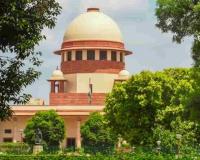
The court further expressed concern over what it described as an “executive veto” in the selection mechanism. Justice Datta questioned whether Parliament had ignored earlier judicial precedents while framing the law governing these appointments. He emphasized that although Parliament possesses the authority to enact laws, the Supreme Court remains the final authority to interpret constitutional validity.
“Parliament has the power to frame the laws. But the Supreme Court is the final arbiter. It will have the power to interpret the laws whether you like it or not,” Justice Datta observed during the proceedings.
The hearing has intensified the constitutional debate surrounding the independence of the Election Commission and the balance of power between the executive and independent institutions. The Supreme Court’s remarks indicate growing judicial scrutiny over whether the present appointment mechanism adequately protects democratic principles and the integrity of the electoral process.
About The Author






Comment List