

During the latest edition of the Point Blank conversation, Executive Editor Shishir Gupta highlighted what he described as a decisive shift in Asia's strategic landscape, stating that the India-Japan relationship has evolved from "strategic trust" to "strategic convergence." According to Gupta, the partnership is now firmly anchored in a shared commitment to preserving a free and open Indo-Pacific, where the South China Sea remains accessible to all commercial shipping and naval forces rather than being treated as China's exclusive sphere of influence.
China's response to Japanese Prime Minister Sanae Takaichi's visit to India reflected Beijing's unease over the strengthening partnership. Chinese authorities publicly stated that India-Japan relations should not target any third country, an assertion widely interpreted as a reference to China. Chinese state-backed media also attempted to diminish the significance of the visit through trivial remarks, including claims that the Japanese Prime Minister would not drink Indian water, in an apparent effort to undermine the diplomatic engagement before domestic and international audiences.
Gupta placed these developments within a broader geopolitical framework, arguing that President Donald Trump's strategic recalibration has substantially reduced the United States' traditional role in managing East and Southeast Asian security while Washington increasingly concentrates directly on China. As a result, countries along the first island chain, including Japan, Taiwan, the Philippines and Indonesia, are expected to assume greater responsibility for their own security. Against this backdrop, Gupta argued that India-Japan strategic convergence has become particularly unsettling for Beijing, which continues to view itself as the dominant power in the South China Sea. China also interprets India's growing engagement through initiatives such as the Quad, deeper relations with Japan, and strategic outreach to Indonesia as inherently directed against Beijing, even while China continues to strengthen ties with Pakistan and other neighbouring countries to exert pressure on India.
Prime Minister Narendra Modi's five-day visit to Indonesia, New Zealand and Australia, following the successful visit of the Japanese Prime Minister, represents India's broader effort to strengthen engagement with the first island chain and the wider Indo-Pacific on its own strategic terms.
Indonesia occupies a particularly significant place in India's regional calculations. Beyond being an important member of the Association of Southeast Asian Nations, Indonesia is also one of India's closest maritime neighbours. India's southernmost point at Indira Point in Great Nicobar lies approximately 140 to 145 kilometres from Banda Aceh in Sumatra, placing both nations across a narrow maritime passage. Indonesia effectively controls access routes leading into the South China Sea through the Malacca, Sunda, Lombok and Ombai-Wetar Straits, giving it influence over three of the four principal maritime choke points used by global commercial shipping. India views stronger defence cooperation with Jakarta, including a possible sale of a BrahMos missile battery valued at nearly 100 million dollars, as a strategic step towards safeguarding these crucial maritime corridors while contributing to regional stability.
Australia and New Zealand represent another essential pillar of India's Indo-Pacific strategy, centred on long-term economic integration and resource security. Australia possesses extensive reserves of critical minerals and remains a potential supplier of uranium, although India seeks to expand access through the conclusion of a comprehensive economic partnership agreement that is still under negotiation alongside the existing free trade agreement. New Zealand already maintains a free trade agreement with India, while discussions continue regarding further expansion of economic cooperation. Together with Japan and Indonesia, these partnerships are expected to support India's efforts to establish resilient supply chains for critical minerals, energy resources and food security while reducing dependence on any single external source.
Gupta argued that India's broader objective is to establish an independent network of trusted strategic partners rather than becoming part of another country's containment strategy. Japan anchors the northern segment of this emerging strategic arc through deepening strategic convergence. The Philippines has already become part of this framework after receiving BrahMos missile systems from India. Indonesia is positioned as the next major strategic partner linking the Bay of Bengal with the South China Sea, while Australia and New Zealand extend India's strategic reach into the Pacific through defence, trade and resource cooperation.
Gupta stressed that India is not targeting any country through these partnerships. Instead, New Delhi is pursuing comprehensive national security encompassing resources, energy, food security and resilient supply chains to ensure long-term strategic autonomy. While the United States increasingly manages its own competition with China, India intends to address its security concerns independently rather than relying on any external power.
The discussion also focused on emerging developments in the Bay of Bengal following Bangladesh Prime Minister Tariq Rahman's diplomatic outreach to China. During his visit to China in June, Rahman sought Chinese participation in the development of the Teesta River and discussed the proposed China-Myanmar-Bangladesh economic corridor.
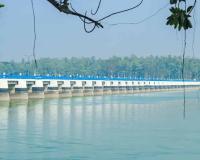
The Teesta River holds considerable strategic and hydrological significance for India. Originating in Sikkim, the river flows predominantly through Indian territory before travelling approximately 105 to 120 kilometres inside Bangladesh and eventually joining the Jamuna River. Gupta argued that China's proposed involvement in infrastructure development along the Teesta raises security concerns because the project is located close to the Siliguri Corridor, India's narrow land connection to its northeastern states. During the tenure of former Prime Minister Sheikh Hasina, India had offered to undertake the Teesta development project itself. Rahman's decision to seek Chinese assistance therefore represents a significant strategic concern for New Delhi, although India has so far adopted a cautious wait-and-watch approach.
Gupta also questioned the immediate viability of the proposed China-Myanmar-Bangladesh economic corridor, describing it as more aspirational than practical under present conditions. Myanmar has recently conducted military strikes against Rohingya militant camps situated across the Bangladesh border, highlighting strained bilateral relations. Large parts of eastern Myanmar remain outside complete government control, with several regions administered by armed organisations including the Arakan Army, Chin groups, Kachin groups and the Brotherhood Alliance. Gupta further noted that extremist organisations based in Pakistan and Bangladesh have infiltrated Rohingya networks operating in the region, further complicating any large-scale infrastructure initiative.
Drawing attention to India's own experience in Myanmar, Gupta observed that the Sittwe Port project connected to the Kaladan Multi-Modal Transit Transport Project has remained incomplete despite being initiated nearly twenty-five years ago. Given these realities, he suggested that Bangladesh may eventually reconsider both the Teesta proposal and the economic corridor, particularly as Myanmar has begun cautiously rebuilding engagement with India while seeking to reduce excessive dependence on China.
The discussion also examined China's expanding maritime presence across the Indian Ocean through a network of strategically located ports commonly described as the "String of Pearls." Gupta argued that this strategy reflects the People's Liberation Army Navy's transition from a predominantly land-focused military force to an increasingly expeditionary maritime power seeking to extend operational reach throughout the Indian Ocean.
Chinese investments and infrastructure projects extend across Cambodia, attempted facilities in Myanmar and Bangladesh, Hambantota in Sri Lanka, projects in the Maldives, a military base in Djibouti, Gwadar in Pakistan, Jask in Iran, strategic interests in the United Arab Emirates and several ports along the eastern coast of Africa. Gupta noted that several of these projects have struggled to achieve their intended objectives. Gwadar has not reached its anticipated operational capacity, while Hambantota has frequently been cited as an underperforming strategic investment despite extensive infrastructure development, including an airport that has seen limited activity. Nevertheless, he argued that the cumulative network provides China with potential logistics and turnaround facilities for naval deployments while expanding its operational presence across the Indian Ocean and further into the Pacific.
India has responded by strengthening its own maritime infrastructure and regional security partnerships. Major development projects are underway in Great Nicobar, while strategic capabilities continue to be reinforced across the Andaman and Nicobar Islands, which overlook vital international sea lanes. India is also investing in infrastructure across Lakshadweep, utilising its network of approximately 162 islands, while exploring expanded strategic cooperation through facilities such as Agaléga in partnership with Mauritius. New Delhi has additionally positioned security advisers within important regional organisations and intensified strategic engagement with both Sri Lanka and the Maldives.
Gupta cautioned that India cannot afford complacency as China's naval expansion continues at a rapid pace. He argued that the evolving network of Chinese maritime facilities requires continuous monitoring and a coordinated strategic response. At the same time, he maintained that India would firmly respond to any attempts by China to expand strategic influence through Pakistan, Bangladesh, Nepal, Sri Lanka or the Maldives, asserting that India's growing geopolitical stature demands recognition and respect commensurate with its regional and global influence.
The discussion concluded with reports that China is preparing to conduct a test of a nuclear-capable missile shortly after Australia and Fiji concluded a new defence partnership. Gupta interpreted the development as a deliberate strategic signal directed at multiple audiences.
China has already established a defence agreement with the Solomon Islands, creating a growing network of strategic partners in the South Pacific. According to Gupta, a missile test under these circumstances would reinforce Chinese commitments to its regional partners while simultaneously sending a warning to Australia, which has strengthened defence cooperation through the AUKUS partnership alongside Japan and the United States. The demonstration would also serve as a reminder to Washington of China's expanding military reach extending towards Guam, a major American military base in the Pacific.
Gupta characterised the anticipated missile launch as strategic signalling rather than immediate escalation. He noted that China possesses a substantial inventory of nuclear and intermediate-range missile systems that remain outside most formal international arms-control agreements, allowing Beijing significant flexibility in conducting such demonstrations. The intended message, he argued, is to emphasise China's strategic presence and compel regional powers to acknowledge its military capabilities before undertaking further security initiatives.
Taken together, the developments discussed during the Point Blank conversation illustrate India's increasingly proactive Indo-Pacific strategy. Through deeper strategic convergence with Japan, stronger engagement with Indonesia, Australia and New Zealand, closer attention to developments in Bangladesh and Myanmar, expanded maritime infrastructure across the Indian Ocean, and careful monitoring of China's growing military activities, New Delhi is constructing an independent security architecture designed to safeguard its national interests while strengthening long-term strategic autonomy across the Indo-Pacific region.
About The Author









Comment List