
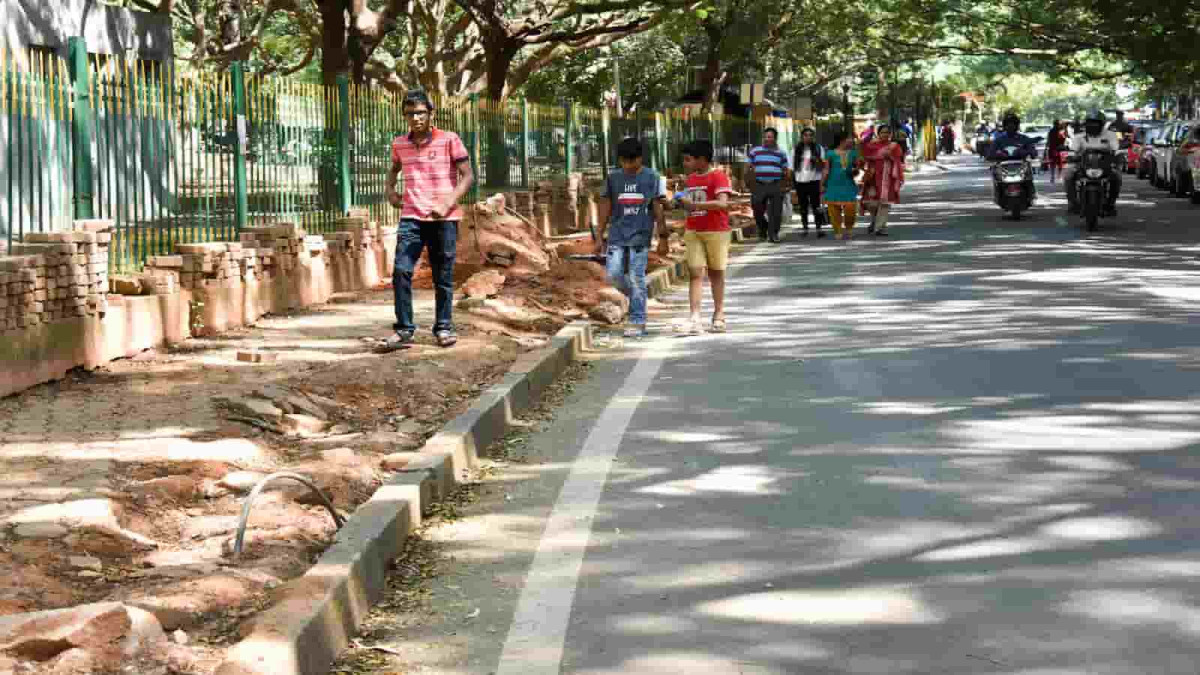
In a judgment delivered on Friday, a bench comprising Justice P. S. Narasimha and Justice A. S. Chandurkar held that the right to walk is an integral component of the freedoms guaranteed under Article 19(1)(d) of the Constitution, which ensures the right to move freely throughout the territory of India. The Court further read this provision in conjunction with Articles 19(1)(a), 19(1)(b), 19(1)(c), and Article 21, which safeguards the right to life and personal liberty.
The bench categorically stated that where a road exists, there is a corresponding and enforceable duty upon authorities to ensure that a properly demarcated and maintained footpath is provided for pedestrians. The Court observed, “If a road exists, there must then be a duty to ensure that a footpath is demarcated and maintained for walkers. This is an enforceable duty.”
The ruling emerged from a motor accident compensation case involving the tragic death of a five-year-old boy. According to the case details, the child was being taken to school by his father at around 9 a.m. when a tanker lorry struck him from behind, resulting in severe injuries that crushed his waist and lower body. The child succumbed to his injuries. The incident occurred at a location lacking both a footpath and a pedestrian crossing.
In its decision, the Supreme Court enhanced the compensation payable to the father to Rs 11,44,628 and directed that the amount be disbursed within two months. The Court also set aside a High Court order that had previously reduced the compensation awarded.
The bench further held that the violation of the right to walk on demarcated footpaths entitles citizens to invoke constitutional and legal remedies against responsible authorities for restitution and compensation. It clarified that such remedies exist independently of those available under the Motor Vehicles Act, 1988.
The Court underscored that the absence of safe and well-maintained pedestrian infrastructure, coupled with the consistent prioritisation of motorised traffic, reflects a long-standing systemic issue in urban planning. It observed that cities and towns have historically been designed with a vehicle-centric approach, leaving pedestrians exposed to risk and vulnerability.
Tracing the historical context of mobility, the Court noted that human beings walked long before the invention of wheeled transport. It emphasised that the fundamental right to movement under Article 19(1)(d) is, at its core, the right to walk, and that this right necessarily includes safe and demarcated pedestrian pathways.
The judgment establishes a strong constitutional mandate for pedestrian safety, reinforcing that the right to walk is not subordinate to vehicular movement but forms an essential part of the broader framework of fundamental rights.
About The Author











Comment List