
.jpg)
According to circulating reports, the alleged military action took place near the coast of Oman, where a commercial oil tanker operated under the Palau flag, identified as MT Settebello, came under attack by United States forces. The vessel reportedly carried 24 Indian crew members. While 21 Indian sailors were reportedly rescued safely, three Indian crew members lost their lives. The deceased have been identified as Patnala Suresh, Aditya Sharma, and Shivanand Chaurasia. The news of their deaths triggered grief and anger among their families.
Further reports suggest that this was not an isolated incident. On June 8, another Palau-flagged tanker, Marivex, was allegedly struck by United States forces, rendering it inoperative, though all 24 Indian crew members onboard were safely evacuated. Following the Settebello incident, a third vessel named Jalveer was also reportedly targeted by the United States Navy in the same region.
The series of incidents has led the Government of India to take a strong diplomatic stance. New Delhi has reportedly stated that the strikes on MT Settebello, Marivex, and Jalveer were carried out by the United States Navy and has formally lodged a strong protest with Washington over the alleged operational failure and the deaths of Indian nationals.
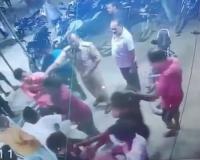
Amid rising tensions, viral videos from New Delhi show Delhi auto-rickshaw drivers removing and tearing promotional posters of United States President Donald Trump from their vehicles. These posters were part of the “Freedom 250” campaign launched by the United States Embassy in India, which aimed to promote celebrations marking the 250th anniversary of American independence.
The campaign, initiated in May by United States Ambassador Sergio Gor, reportedly involved around 100 auto-rickshaws in Delhi being fitted with covers featuring the United States flag, Donald Trump’s image, and slogans such as “Happy Birthday America.” Drivers were reportedly paid for participating in the promotional initiative.
However, following reports of the alleged maritime incidents, public sentiment shifted sharply. In the viral videos, several drivers can be seen removing the campaign posters in anger, with some expressing strong emotions over the reported deaths of Indian nationals. One driver is heard stating that it is unacceptable to display such imagery while Indians are allegedly being killed abroad, while another driver is seen chanting patriotic slogans.
The controversy has effectively overshadowed the United States Embassy’s promotional campaign, transforming a public relations initiative into a focal point of protest and diplomatic tension. The situation continues to draw attention on social media, reflecting growing public sensitivity over international incidents involving Indian citizens.
The developments highlight a rapidly escalating situation where diplomatic concerns, public sentiment, and viral media narratives are converging, placing additional pressure on already strained international relations.
About The Author

.jpg)
.jpg)






Comment List