

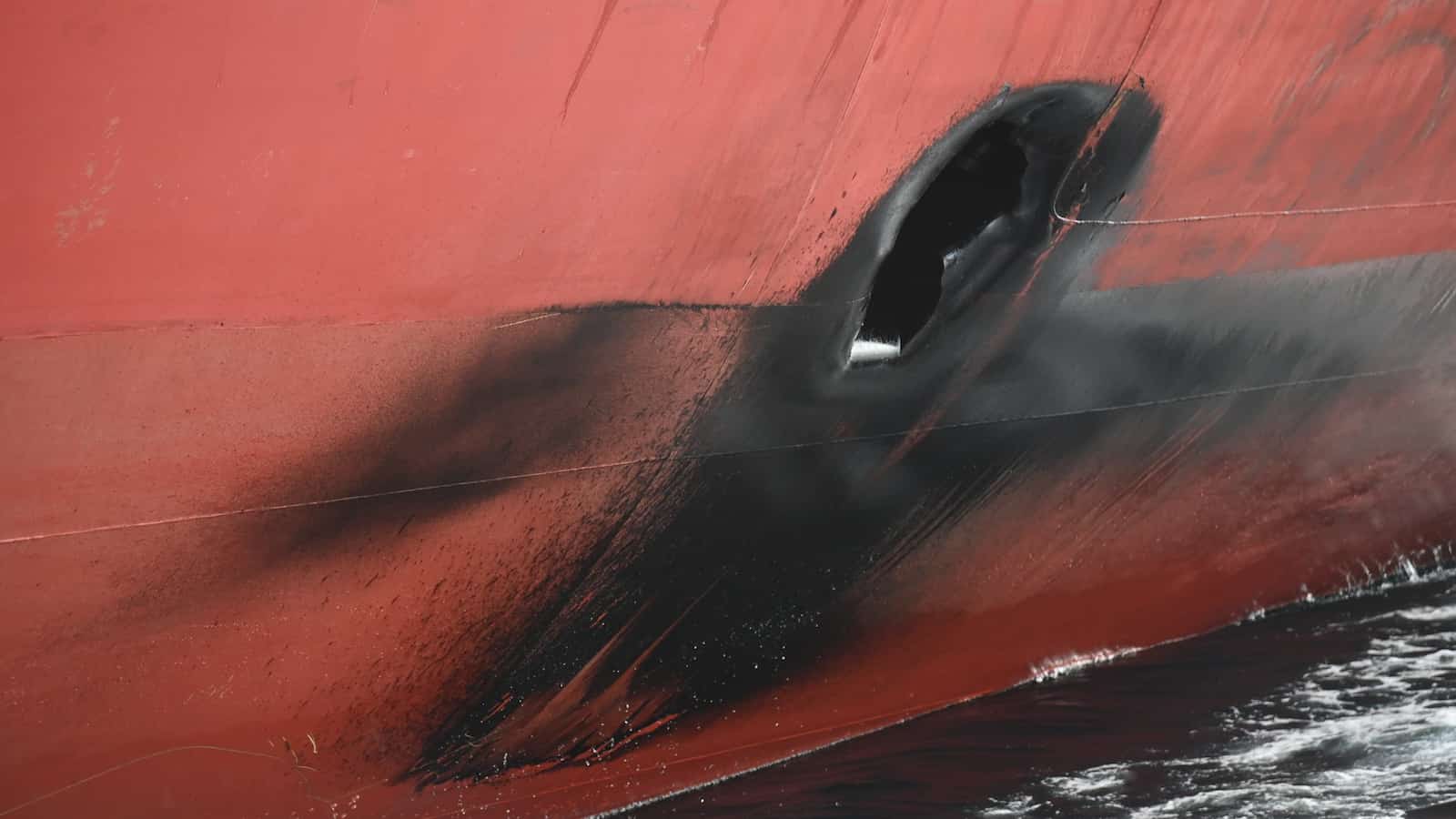
In a high-risk operation that averted a potential maritime disaster, the Indian Navy successfully recovered an unexploded missile warhead from a crude oil tanker that had sailed nearly 2,000 kilometres after being struck off the coast of Oman. The warhead had penetrated the vessel's hull and become lodged inside a fuel tank, creating a serious threat to the ship, its crew and critical port infrastructure.
The Marshall Islands-flagged crude oil tanker MT Olympic Life was travelling from Fujairah in the United Arab Emirates to Kochi when it reported an explosion in its hull on May 26, 2026, while sailing off the coast of Oman. According to the Ministry of Defence, the vessel later informed authorities that an unexploded missile remained onboard following the incident.
The recovery operation was conducted by a specialist Explosive Ordnance Disposal team deployed by the Southern Naval Command based in Kochi. The operation involved identifying, isolating and safely extracting the missile warhead and associated debris after a detailed assessment of the threat.
The incident occurred against the backdrop of escalating security risks for commercial shipping in the Middle East, where merchant vessels have increasingly been exposed to missile strikes, drone attacks and sea mine threats amid the ongoing conflict involving the United States, Israel and Iran. Commercial shipping companies operating in the region have also faced naval blockades and rising insurance costs, while strategic waterways such as the Gulf of Oman and the Strait of Hormuz have become among the world's most sensitive maritime corridors due to their role in global energy transportation.
Following the collapse of a ceasefire and renewed escalation of hostilities, merchant vessels operating in the Gulf of Oman and surrounding waters have come under increased threat. Since June 9, three ships crewed by Indian nationals have reportedly been hit by United States forces enforcing a blockade around the Sea of Oman. In one of the incidents, three Indian seafarers were killed during a strike on tankers accused of violating a blockade on Iranian ports, prompting India to summon the United States Charge d'Affaires and lodge a formal protest. India condemned the attacks on civilian commercial vessels, while maritime experts, strategic analysts and shipping industry officials described the strikes as illegal and dangerous for global shipping.
According to the Ministry of Defence, the response to the MT Olympic Life incident was coordinated through the Information Fusion Centre – Indian Ocean Region. Following the alert, the Southern Naval Command dispatched a specialist Explosive Ordnance Disposal team to examine the vessel.
The Information Fusion Centre – Indian Ocean Region, established by the Indian Navy in 2018 and located in Gurugram, Haryana, operates as a round-the-clock maritime security and information-sharing centre. It serves as a key component of India's Security and Growth for All in the Region doctrine.
The Navy's inspection revealed the scale of the threat. Officials determined that a projectile had pierced the vessel's hull, passed through multiple structural compartments and ultimately become lodged inside a fuel tank. The discovery raised serious concerns because the unexploded warhead remained embedded within a fuel storage compartment of a crude oil tanker capable of transporting millions of barrels of oil.
Recognising the dangers posed by the unexploded ordnance, the Explosive Ordnance Disposal team adopted a carefully planned and phased approach. According to the Ministry of Defence, the operation was designed to ensure the safety of the vessel, its crew and nearby port infrastructure.
The specialists conducted prescribed safety procedures before employing advanced diagnostic techniques to identify and isolate the warhead's detonation mechanism. Once the threat was neutralised, the team successfully extracted the missile warhead along with associated debris.
The recovered ordnance was subsequently transported to a secure facility for storage and detailed examination. The Ministry of Defence described the mission as a meticulously planned and executed high-risk operation that demonstrated the Indian Navy's expertise in explosive ordnance disposal and its capability to manage complex maritime emergencies.
The ministry further stated that the operation reflected India's Security and Growth for All in the Region and Mutual and Holistic Advancement for Security Across the Regions vision, under which the Indian Navy serves as a first responder and security provider across the Indian Ocean Region. Officials emphasised that the mission was carried out irrespective of the nationality of the crew or the ownership of MT Olympic Life, underscoring India's commitment to global maritime safety and reinforcing its position as a trusted security partner in the region.
The successful recovery of the unexploded missile warhead from MT Olympic Life stands as a significant demonstration of the Indian Navy's operational capability and crisis-response preparedness. By eliminating a potentially catastrophic threat aboard a fuel-laden tanker, the operation prevented a possible maritime disaster and highlighted India's growing role in safeguarding international shipping lanes during a period of heightened regional instability.
About The Author











Comment List