

Amid growing tensions over Saudi Arabia’s infrastructure and regional security, former US National Security Adviser Lieutenant General H.R. McMaster has questioned the roles of Pakistan and Turkiye in the Mecca Joint Defence Agreement. He has expressed doubts about Pakistan’s intentions and its ability to implement the agreement, while also offering critical views on the policies of Turkiye’s current government.
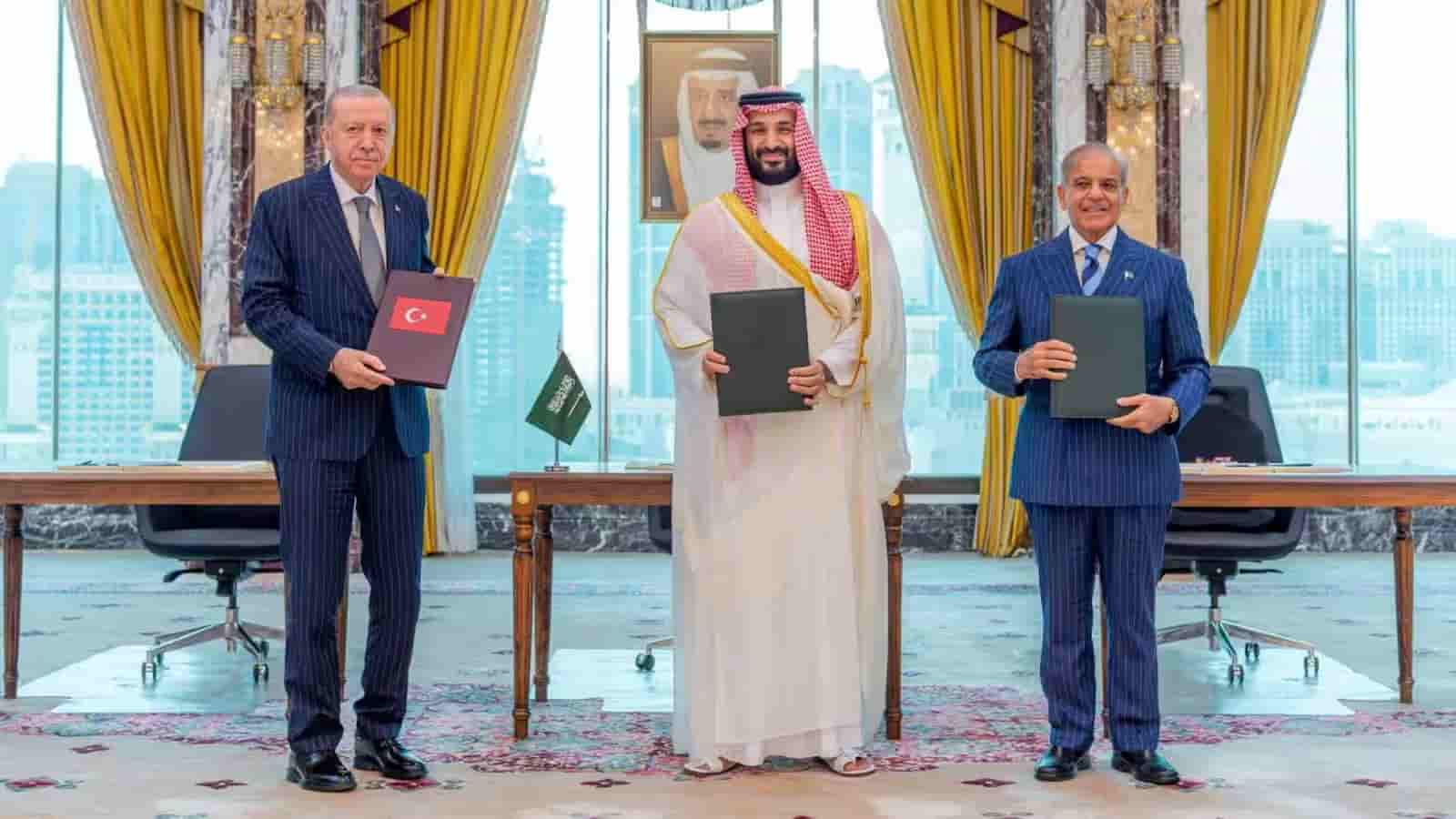
Saudi Arabia, Pakistan and Turkiye signed the Mecca Joint Defence Agreement on August 7, 2026. Under the agreement, an armed attack against any one of the three countries would be treated as an attack against all three. Turkiye later described it as technically similar to a collective defence arrangement such as NATO’s Article 5.
McMaster has raised particular questions over Pakistan’s role in the agreement. He said it would now have to be seen whether Pakistan actually implements the terms of the pact. According to him, Pakistan’s policies have repeatedly demonstrated an ability to operate in different directions at the same time.
McMaster also claimed that the Mecca agreement could be largely symbolic and that it may be aimed at maintaining the flow of economic assistance from Saudi Arabia to Pakistan. This is McMaster’s assessment, and he did not present any public evidence in support of the claim.
Pakistan Prime Minister Shehbaz Sharif had described the agreement as an important step for regional peace and security. Pakistan has also presented it as an agreement that would strengthen long-standing defence cooperation among the three countries.
McMaster also expressed concerns over Turkiye’s role in the arrangement. He clarified that his comments were not directed against the people of Turkiye, but at the policies of President Recep Tayyip Erdogan’s government and his party, the AKP.
He alleged that the Turkish government has supported policies promoting the Muslim Brotherhood and some other organisations, alongside economic cooperation from Qatar. He accused these organisations of promoting jihadist terrorism and an ideology of hatred.
The Mecca Joint Defence Agreement was signed by Saudi Arabia, Pakistan and Turkiye in Mecca on August 7. Its primary objective is to strengthen collective security and defence cooperation among the three countries.
The agreement states that an armed attack against any one member would be considered an attack against all three countries. It also provides for new coordination mechanisms involving the defence and foreign ministers and military chiefs of the three countries.
The pact further includes plans for joint military exercises, cooperation in air defence, drones and other unmanned systems, as well as joint development of defence technology. McMaster’s comments have therefore placed renewed focus on how the three-country security arrangement will operate and how the commitments made under the agreement will be implemented.
About The Author









Comment List