

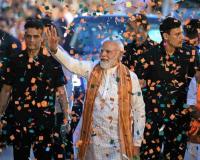
Following a visit by Prime Minister Narendra Modi to the party headquarters, a high-level meeting was convened involving Union Home Minister Amit Shah, BJP president Nitin Navin, and former president J. P. Nadda. The discussions focused on critical aspects including government formation, leadership selection, and planning for the swearing-in ceremony.
Simultaneously, BJP General Secretary and West Bengal in-charge Sunil Bansal is scheduled to arrive in New Delhi after holding a key meeting at the party’s Salt Lake office in Kolkata. His consultations with the central leadership are expected to play a decisive role in finalising the legislative party meeting, appointing observers, and selecting the Chief Minister.
The swearing-in ceremony is likely to take place on May 9, a date highlighted by the Prime Minister as culturally significant due to the birth anniversary of Rabindranath Tagore. The choice of date is being viewed as a strategic effort to align governance with regional sentiment and cultural identity.
Meanwhile, Suvendu Adhikari has emerged as a leading contender for the Chief Minister’s post. Celebrations among party workers in Kolkata indicate strong grassroots support for his leadership, particularly following his recent electoral victories over Mamata Banerjee. Although no official announcement has been made, indications suggest that the BJP leadership is moving swiftly toward finalising its decision.
With continuous coordination between Kolkata and New Delhi, the political landscape of West Bengal stands on the verge of a defining shift as the party prepares to assume power, marking a significant moment in the state’s governance and political trajectory.
About The Author









Comment List