

From May 1968 to the 2006 demonstrations against the First Employment Contract (CPE), strikes, campus occupations and nationwide marches have played a significant role in French political and educational history. Several movements led to major changes in university governance, government spending on schools or the withdrawal of proposed legislation.
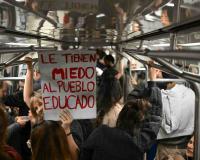
The current movement began at the end of September among schools in Île-de-France. Students are raising concerns about teacher and staff shortages, overcrowded classrooms, the condition of school buildings, Parcoursup and study conditions. As high school and university students are once again urged to demonstrate, earlier protests offer examples of how youth mobilisation has influenced government decisions.
May 1968 remains a defining moment in the history of student activism in France. The movement began notably in Nanterre before spreading to the Sorbonne and expanding beyond universities into a broader social and political challenge. It developed into a national crisis, with a general strike involving several million workers.
The consequences for higher education were substantial. On November 12, 1968, the Edgar Faure law reshaped the organisation of French universities. It introduced greater university autonomy, expanded student and staff participation in governance and fundamentally changed traditional university structures. The movement contributed to a profound transformation of the French university system.
Another decisive confrontation came in autumn 1986, when students opposed a bill promoted by Alain Devaquet, the minister for higher education. The proposed legislation envisaged greater university autonomy and opened the way for tougher entrance selection.
Protests spread rapidly across campuses. General assemblies voted for strikes, universities were occupied and demonstrations gained momentum throughout France.
The movement reached a turning point during the night of December 5 to 6, 1986, following the death of Malik Oussekine, 22, who was struck by riot police in Paris. Public outrage intensified in response to his death. Alain Devaquet resigned, and the government led by Jacques Chirac ultimately announced the withdrawal of the bill. François Mitterrand publicly acknowledged the gravity of the situation on December 6. The episode remains one of the clearest examples of student mobilisation forcing the complete abandonment of a proposed reform.
In October and November 1990, high school students took centre stage again. The movement began notably in Seine-Saint-Denis, where students highlighted problems that remain central to the 2026 protests: overcrowded classrooms, deteriorating school buildings, staff shortages and concerns about safety in schools.
Demonstrations reached their peak on November 12, 1990. Faced with the scale of the protests, Minister of National Education Lionel Jospin announced an emergency plan for high schools. The ministry closely monitored its implementation, while representatives of high school coalitions were received on rue de Grenelle. Although the movement did not transform the entire education system, it prompted a national budgetary and administrative response to concerns initially raised at individual schools.
Eight years later, high school students returned to the streets with similar demands. During autumn 1998, they called for more teachers, additional resources and improved study conditions. On October 13, around 200,000 pupils demonstrated across France, according to estimates at the time.
Bordeaux, Toulouse, Lyon, Rennes, Marseille and Grenoble witnessed marches involving thousands of young people. In Paris and its suburbs, the first major demonstrations had already attracted about 10,000 young people the previous day.
The protesters highlighted overcrowded classrooms, teacher shortages, packed schedules and school safety. On October 21, Minister Claude Allègre announced a package of measures addressing high schools. The movement subsequently continued in a more dispersed form, with some students considering the announcements insufficient. Although the protests did not secure a complete victory, they put pressure on the government to introduce specific measures quickly.
The 2006 protests against the First Employment Contract, widely known as the CPE, provide another prominent example of student mobilisation forcing a government to reverse course.
In early 2006, the government of Dominique de Villepin sought to introduce a contract for people under 26 working in companies with more than 20 employees. The proposal allowed employers to terminate the contract more easily during an initial two-year period. Students and high school pupils opposed the measure, arguing that it could increase insecurity for young people entering the labour market.
Universities were occupied or blocked as demonstrations spread nationwide. From February, union groups made their objective clear: the CPE had to be scrapped. The confrontation continued for more than two months.
A fresh student demonstration took place in Paris on March 23, 2006. By March 28, the issue continued to dominate parliamentary debates as protests persisted. On April 10, Jacques Chirac and Dominique de Villepin announced that the CPE would be replaced. The measure was ultimately never implemented.
Parliamentary debates in the following days explicitly referred to the disappearance of the CPE after mobilisation by student, high school and union groups.
These episodes illustrate the different ways student protests have influenced French policy. May 1968 contributed to a major restructuring of universities, the 1990 and 1998 movements prompted measures for high schools, and the 1986 and 2006 protests resulted in the withdrawal or abandonment of proposed reforms. As the latest demonstrations focus on staffing, infrastructure and study conditions, the country's history shows that student mobilisation can extend beyond campus blockades to produce lasting administrative and political consequences.
About The Author

Related Posts


Latest News
16 Oct 2026 19:57:17
Reliance Jio's IPO is approaching, with Reliance reportedly releasing salaries early for over 4 lakh employees. Discover the employee quota,...


Advertisement
Science & Tech
22 Sep 2026 16:18:50
US Treasury Secretary Scott Bessent says OpenAI management, not AI agents, should bear responsibility for the Hugging Face hack as...

Health
09 Dec 2025 19:18:57
A growing number of dermatologists are endorsing coffee-based home remedies as natural, affordable alternatives to commercial skincare. From face scrubs...

Lifestyle
03 Apr 2026 16:34:37
Food influencer Revant Himatsingka, known as Food Pharmer, has sparked nationwide debate after revealing Cheeslings’ low cheese content and high...

Comment List