
.jpg)
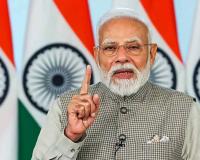
In a strongly worded communication to the Ministry of Electronics and Information Technology (MeitY), the committee expressed serious concern over the removal of a video in which Prime Minister Modi addressed students and Gen Z regarding examination controversies and paper leaks. The video remained unavailable on Facebook for approximately five to six hours before being restored.
The committee directed Zuckerberg to tender an apology within three days of receiving the letter. It warned that if Meta's CEO fails to provide an unqualified apology within the given period, the protection and immunity granted under Section 79(3) of the Information Technology Act may be withdrawn, and action would be taken against him as a Publisher.
The development follows a meeting held on August 3, 2026, where representatives from the Ministry of Home Affairs (MHA), MeitY, and major digital platforms, including Meta, Google, X (formerly Twitter), Snapchat, and YouTube, discussed the regulation of social media platforms.
Apart from the removal of the Prime Minister's content, the panel also raised concerns over online safety of women and children. It demanded immediate action against intermediary platforms carrying Child Sexual Abuse Material (CASM) and content demeaning to women. The committee warned that failure to remove such material would result in withdrawal of protection under Section 79(3) of the IT Act.
The committee also flagged a recent case involving Google India. Referring to the Hyderabad Cyber Police action against the Google India Head, who was named as a co-accused in a Rs 48 lakh investment fraud involving fake applications, the panel urged the Central Government to initiate similar strict action against the technology company.
Earlier, committee chairperson Nishikant Dubey, BJP MP from Godda, said Meta had admitted that the Prime Minister's video content was unavailable for more than four hours.
"Meta India removed the Prime Minister's content. This is not the first time Meta India has done this. If you recall, Zuckerberg himself made a statement in January regarding the 2024 elections and later apologised. This shows that his intention is to destabilise the country. When a video of the Prime Minister of India can be removed, and they themselves admitted that the content was missing for five hours, from 12:30 am to 5:00 am, this is a very serious matter," he said.
"Our committee has said two things and has clearly stated that the apology should come from Zuckerberg. If Zuckerberg does not give it, then the safe harbour protection under Section 79 should be withdrawn from him," he added.
Safe harbour is conditional legal protection provided to websites that allow users to share content. Under the Information Technology Rules, intermediaries, including social media platforms, have specific legal responsibilities to ensure accountability towards a safe and trusted internet, including taking swift action against prohibited misinformation, patently false information, and deep fakes.
If intermediaries fail to comply with legal obligations under the IT Rules, they lose safe harbour protection under Section 79 of the Information Technology Act, 2000 ("IT Act") and can be treated as publishers.
The Meta-owned social media platform had restricted access to Prime Minister Modi's video last month before restoring it. The video, released on July 23, marked Prime Minister Modi's first direct address to Gen Z during protests over the NEET-UG 2026 examination paper leak.
In the video, Prime Minister Modi assured students that the government would take stronger action against examination paper leaks and said stricter legal provisions would be brought before the Union Cabinet. The controversy has now intensified scrutiny over the accountability of major digital platforms and their legal protections in India.
About The Author








Comment List