

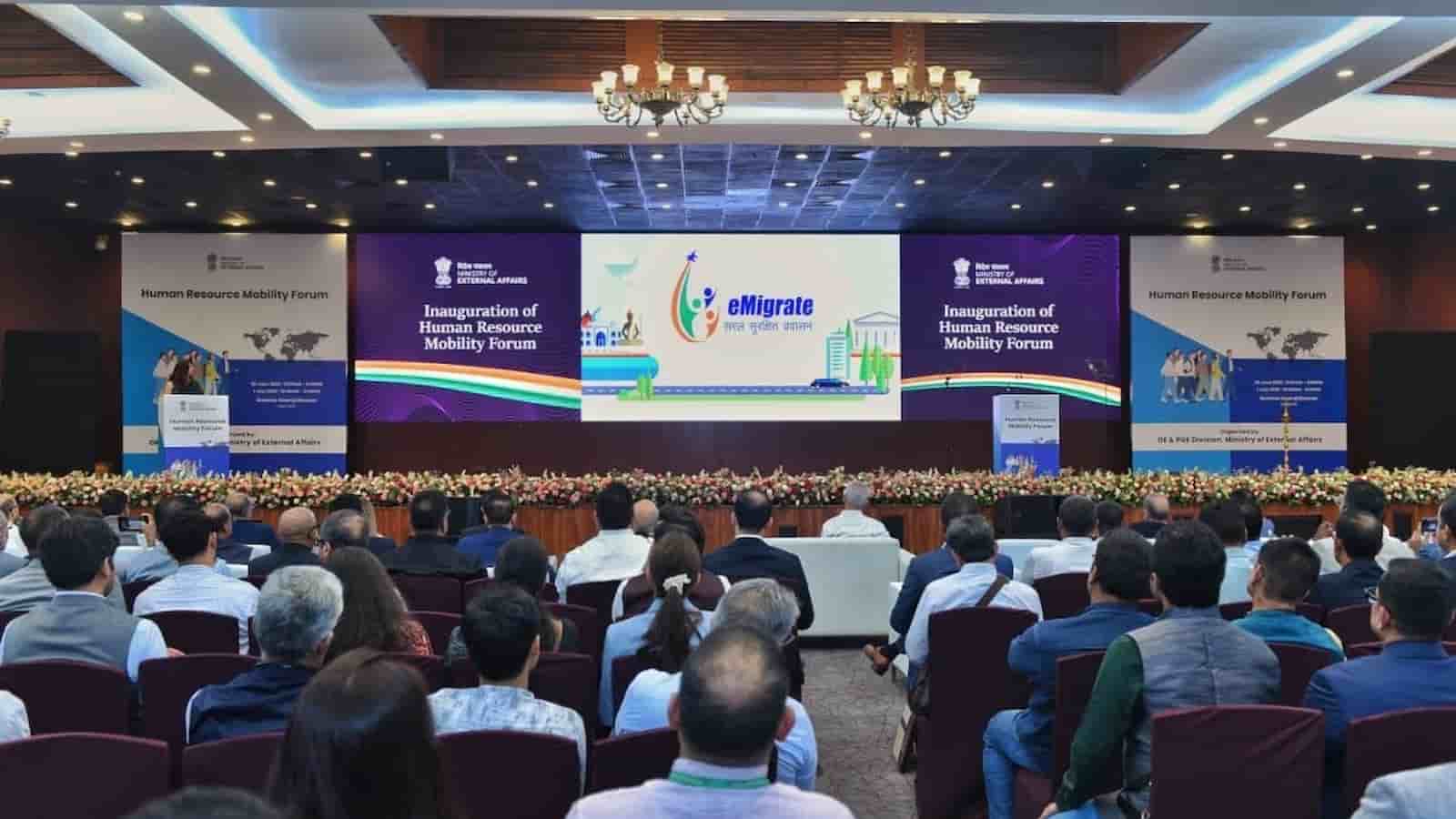
External Affairs Minister Dr. S. Jaishankar on Tuesday announced that India has signed 28 Migration and Mobility Partnership Agreements with more than 26 countries, while negotiations are currently underway with several other nations. He emphasized that countries across the world share a collective responsibility to tackle illegal migration, exploitative practices, fraudulent intermediaries, and human trafficking through stronger international cooperation.
Addressing the Human Resource Mobility Forum in New Delhi, Dr. Jaishankar highlighted India's commitment to promoting safe, orderly, and legal migration. He stated that the country's e-Migrate platform reflects this commitment, adding that more than five million immigration clearances have been issued since the platform was launched. He said India recognizes the importance of bilateral collaboration in ensuring secure and lawful migration and continues to strengthen partnerships based on mutual trust and shared responsibility.
The External Affairs Minister said the Human Resource Mobility Forum provides an important platform for exchanging ideas, learning from global experiences, and exploring innovative approaches to international mobility. He noted that the event brought together policymakers, industry leaders, employers, and practitioners to discuss the future of global workforce mobility. He added that India remains committed to working with partners worldwide to advance a shared vision for trusted mobility pathways that contribute to stronger economies, more resilient societies, and deeper international cooperation.
Dr. Jaishankar also highlighted the rapid transformation taking place across the world due to technological innovation. He said demographic patterns are changing significantly across continents, while artificial intelligence, automation, digitalization, and the green transition are reshaping industries and redefining the skills required for the economy of the future. According to him, human resources have emerged as one of the most critical drivers of economic development in the evolving global landscape.
Emphasizing the broader significance of workforce mobility, Dr. Jaishankar said that human resource mobility extends far beyond the movement of people between countries. He stated that it is about connecting aspirations with opportunities, matching talent with demand, and creating pathways through which individuals can contribute to economic growth and development. He further said that India's vision for mobility is not confined to facilitating overseas employment opportunities but also serves as a vital pillar of international cooperation.
Concluding his address, the External Affairs Minister said India's migration and mobility partnerships are founded on the principles of mutual benefit, shared responsibility, and long-term sustainability. He reiterated that strengthening trusted and legal mobility frameworks will play a crucial role in supporting global economic progress while ensuring safe and regulated movement of skilled professionals across international borders.
About The Author


.jpg)








Comment List