

For years, menstrual health initiatives have focused largely on helping girls access menstrual products, information and hygiene. However, creating a stigma-free experience also requires changes in the attitudes and behaviour of boys growing up alongside them as classmates, friends, brothers and, eventually, partners and colleagues.
Ujaas, an initiative of the Aditya Birla Education Trust founded by Advaitesha Birla, has been working to bring boys into the menstrual health conversation. Its impact assessment of 2,402 boys in Maharashtra found measurable changes in how they understand and engage with menstruation.
Following the intervention, understanding of puberty increased by 83.6%, comfort in discussing menstruation rose by 59.8%, and confidence to support female peers increased by 51.7%. The proportion of boys who believed they should understand menstruation rose from 50% to 72%, indicating growing recognition that menstrual health is not only a girls’ issue but a shared responsibility.
However, the findings also revealed a gap between changing attitudes and everyday behaviour. While confidence in supporting female classmates increased from 54% to 82%, the proportion of boys demonstrating an appropriate response when a classmate had stained her clothes declined from 43% to 40%.
For Ujaas, the gap is significant because it shows that changing what boys know and believe is only the first step. The real test lies in how that understanding translates into behaviour when a girl is experiencing a moment of vulnerability. The next step is therefore to move from awareness and intention towards empathy, sensitivity and the confidence to respond appropriately.
Speaking on the insights, Ms Advaitesha Birla, Founder Ujaas an initiative of Aditya Birla Education Trust, said, “Menstrual health is not exclusively a women’s issue. It is a shared social responsibility. Involving boys in this movement transforms period awareness from a passive topic into active, everyday allyship. At Ujaas, our mission goes beyond imparting knowledge; it’s about inspiring empathetic behavior so that dignity, safety, and respect become the default culture across our institutions and communities.”
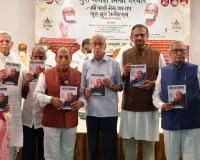
With this understanding, Ujaas launched Let’s Talk RED – Youth in Action, its youth-led menstrual health platform, bringing together students from four Mumbai colleges on 24 August. The initiative moved the conversation beyond the biology of menstruation to examine how stigma, myths, language and everyday responses can affect girls, and what young men can do differently as friends, classmates and family members.
Students reflected on the Menstrual Rights Charter and examined how changes in language, behaviour and institutional culture can contribute to more respectful and menstrual-health-friendly campuses.
The initiative builds on the first edition of Let’s Talk RED, which provided girls with a platform to share the challenges they face around menstruation. Their experiences and perspectives culminated in a Charter of Demands for creating menstrual-health-friendly schools, colleges and enabling environments.
This year, Ujaas is taking the conversation forward from sharing challenges to driving action, and from identifying what needs to change to enabling young people to become part of that change.
The discussion also highlighted a strong view among students that creating menstrual-health-friendly environments must begin with changing attitudes at an early age. The Period Ally Stats Board, which captured responses from 56 female and 31 male participants across 10 statements, highlighted an opportunity to move from awareness towards active allyship.
Among male respondents, 50% said they already speak up when they hear jokes, teasing or comments that reinforce period stigma, while 38.9% said they would like to start doing so. Similarly, 44.4% said they already advocate for better menstrual facilities or support in their college or community, while another 44.4% said they would like to start.
The findings reinforced the students’ view that systemic improvements such as better facilities and access to menstrual products remain important, but sustainable change also requires addressing stigma, misinformation and social attitudes. The participating colleges will take these conversations forward through student-led awareness and peer engagement during the academic year.
A student panellist representing the participating colleges across Mumbai and Kalyan — Bhavan’s College (Andheri), Thakur College (Kandivali), KJ Somaiya College and BK Birla College (Kalyan) — said, “Once you understand what girls experience, you realise that menstruation is not something boys can simply stay out of. Being an ally can be as simple as knowing how to respond when someone needs help, not making a joke out of something that can already feel uncomfortable, and being able to talk about periods without making them a taboo. Even small changes in how we respond can make someone feel more comfortable, respected and supported.”
Ujaas will continue working with the participating colleges through the academic year to support and follow up on these action plans, with the aim of extending menstrual-friendly practices beyond campuses and into the wider environments in which young people live, including their peer groups, families and communities.
The larger lesson from the Ujaas findings is that ending menstrual stigma cannot be the responsibility of girls alone. If girls are to grow up without feeling ashamed of a normal biological process, the attitudes of the people around them must change as well.
For Ujaas, menstrual health progress is therefore not only about whether girls have access to products or understand how to manage their periods. It is also about whether the people and institutions around them know how to respond with empathy, respect and dignity, ensuring that a period stain becomes a moment of support rather than a moment of shame.
About Ujaas
Ujaas is an initiative of the Aditya Birla Education Trust, founded by Advaitesha Birla, working to normalise menstrual health across schools, communities and homes. With programmes across Maharashtra and Delhi, Ujaas combines structured menstrual-health education, community engagement, access to sustainable menstrual products and women-led livelihood models.
In 2025–26, the initiative reached 4,35,842 people through 13,194 menstrual-health education sessions across 1,704 educational institutions, including 63,841 boys and men, while engaging 62,794 community stakeholders. Its SHG-led Ujaas Green Sanitary Pad Manufacturing Units and Period Sakhi model also create livelihood opportunities for women while expanding access to sustainable menstrual products.
About The Author








Comment List