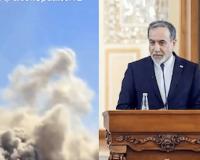
Tehran Rejects US Peace Proposal, Demands Sovereign Control Over Strait of Hormuz as War Tolls Mount

Tehran Rejects US Peace Proposal, Demands Sovereign Control Over Strait of Hormuz as War Tolls Mount

Iran rejects the U.S. peace proposal and demands sovereign control over the Strait of Hormuz, seeking to formalize ship tolls that could generate billions. As global crude prices soar past $110 and Donald Trump faces rising domestic fuel pressure, Tehran’s 10-point agenda seeks to cement its role as the Gulf gatekeeper while funding its post-war reconstruction and military rearmament.


Iran has officially rejected a United States peace proposal, with state media reporting that the regime maintains any settlement must include a permanent, rather than temporary, end to the war that commenced on February 28. Tehran remains defiant against U.S. President Donald Trump’s increasingly frustrated efforts to reopen the Strait of Hormuz—including a shocking "crazy b*****ds" Truth Social post—clashing over a maritime channel that handles approximately 20 per cent of global seaborne crude. In place of the American plan, Iran has offered a fresh 10-point agenda demanding international recognition of its rights over the Hormuz, the right to a civil-use nuclear programme, the lifting of all economic sanctions, a cessation of Israeli attacks on Lebanon, and war-time reparations.

The demand for authority over the Hormuz is critical as it represents a calculated move for significant financial gain. As one of the world’s most vital energy chokepoints, the 33km-wide passage, shared geographically with Oman, saw between 100 and 135 ships daily pre-war, carrying 20 to 25 million barrels of crude primarily to India, China, Japan, and South Korea. Since the conflict began, Iran has enforced a de facto blockade, amplified by missile and drone strikes on tankers, driving insurance and freight costs to extreme levels. While a limited number of vessels have been permitted transit following back-channel talks and the payment of a "toll" reportedly totaling US$2 million per ship in Chinese yuan, the Indian government maintains a firm stance. A senior official from the Ministry of Shipping stated that no tolls have been paid, asserting that no permission is required to sail and that the decision remains with charterers and shipping companies.

Formal recognition of this authority would translate into a staggering financial windfall for Tehran, estimated at US$4.5 billion a month for crude tankers alone based on a conservative US$1-1.5 million toll per ship, with an additional US$800 million projected from gas tankers. These tensions have propelled benchmark Brent crude past US$110 a barrel, a 38 per cent increase since February 28. In the United States, average fuel prices crossed US$4 per gallon last month, intensifying pressure on Donald Trump. While the Indian government has absorbed costs to keep domestic prices relatively stagnant and has worked to diversify import sources, the long-term sustainability is questioned, as India previously relied on this channel for 40-50 per cent of its crude needs.

Beyond economics, control over the Hormuz allows Iran to function as the "gatekeeper" of the Gulf, leveraging its position alongside the Houthi-influenced Bab al-Mandab Strait to exert pressure on global energy flows. While non-aligned actors like India have seen some ships pass unscathed, U.S. and Israeli-flagged vessels have been stopped cold. Tehran reportedly intends to use the resulting revenue to rebuild infrastructure destroyed by U.S.-Israel strikes and restock its missile and drone arsenals. This move to formalize the Hormuz as a "managed corridor" serves as a strategic deterrent against further American or Israeli aggression, though international observers warn it could lead to renewed fighting and force Asian economies to inadvertently fund Iran's rearmament through inflated fuel costs.

Read More Bombay High Court Rules Wife Not Guilty of Abetment in Husband’s Suicide Amid Marital Disputes

Tags:

About The Author

Post Comment

Comment List

Latest News

Flow Haus in Mumbai Redefines Residential Design Through Subtle Transformation and Material Precision Flow Haus in Mumbai Redefines Residential Design Through Subtle Transformation and Material Precision
Flow Haus in Mumbai showcases a refined residential transformation by Studio Osmosis, where material continuity, spatial recalibration, and sculptural detailing...
South Indian Culinary Wave Sweeps Mumbai as Four New Restaurants Open Across the City
Mumbai Metro Line 9 Inauguration Signals Major Leap in Urban Connectivity and Sustainable Transit

Live Cricket Score

Advertisement

Science & Tech

 PM Narendra Modi Highlights Civilisational Legacy at Samrat Samprati Museum Inauguration in Gandhinagar PM Narendra Modi Highlights Civilisational Legacy at Samrat Samprati Museum Inauguration in Gandhinagar
Prime Minister Narendra Modi inaugurates the Samrat Samprati Museum in Gandhinagar, highlighting Jain philosophy, India’s civilisational identity, and the role...
Bengal’s Naxalbari Movement: Genesis Of Maoist Menace And Its Enduring Legacy

Health

Coffee-Based Home Remedies Gain Ground as Dermatologists Highlight Natural Skincare Benefits Coffee-Based Home Remedies Gain Ground as Dermatologists Highlight Natural Skincare Benefits
A growing number of dermatologists are endorsing coffee-based home remedies as natural, affordable alternatives to commercial skincare. From face scrubs...
Moringa’s Rise as a Global Superfood Gains Momentum Amid New Research

Lifestyle

 Food Pharmer Sparks Nationwide Debate Over Cheeslings Ingredients, Raises Questions on Food Safety Standards Food Pharmer Sparks Nationwide Debate Over Cheeslings Ingredients, Raises Questions on Food Safety Standards
Food influencer Revant Himatsingka, known as Food Pharmer, has sparked nationwide debate after revealing Cheeslings’ low cheese content and high...
From Gym Floor to City Streets: The Unexpected Revival of the Lopifit Treadmill-Bike
crossorigin="anonymous">