
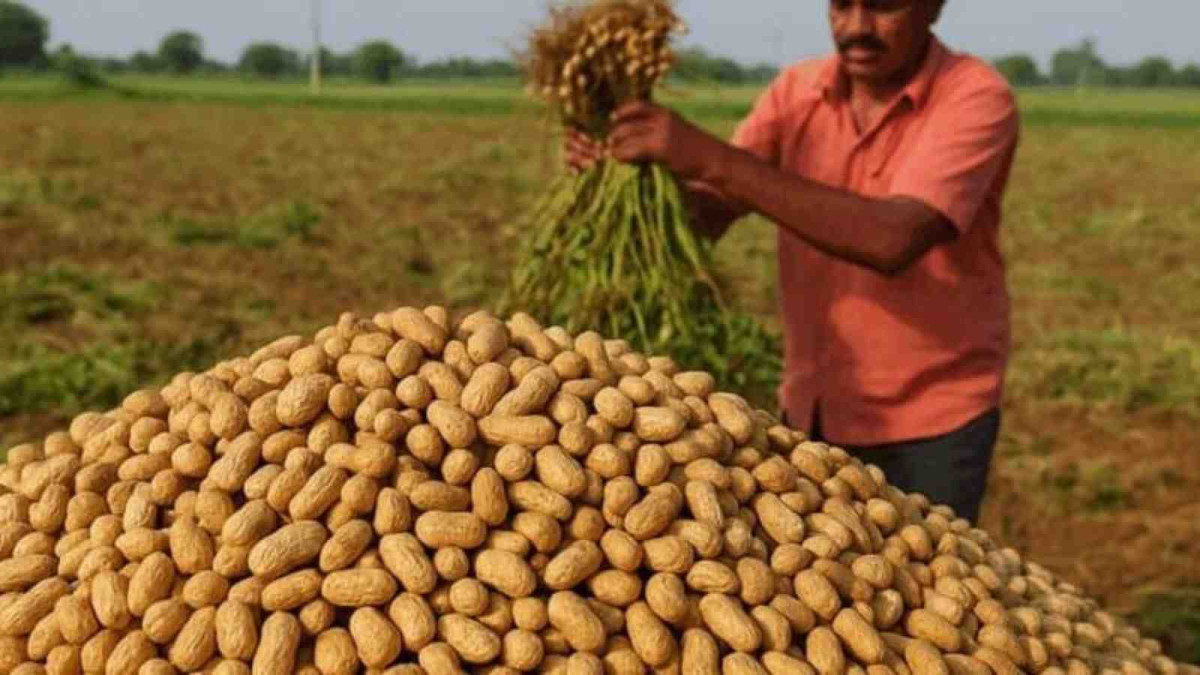
In the oilseeds category, Groundnut has become the standout performer. Against a Minimum Support Price (MSP) of 7,263.00 per quintal, market prices have climbed to an impressive high of 9,298.46. This substantial gap indicates strong demand and potentially tighter supplies, further evidenced by the arrival of 2,062.00 metric tonnes in the state's wholesale markets. The fiber crop sector remains relatively balanced; Cotton, a staple for the region's textile economy, is trading nearly at parity with its MSP of 7,710.00. While the market price hovered around 7,725.00, the steady arrival of over 700 metric tonnes suggests a period of price consolidation for the fiber.
However, the outlook is less optimistic for pulse cultivators. Bengal Gram (Gram Whole) is currently navigating a bearish phase, with market prices languishing at 4,909.00 per quintal—well below the established MSP of 5,650.00. This deficit highlights a critical disconnect between government support structures and actual market liquidity, even as arrival volumes remain low at 32 metric tonnes. Meanwhile, the perishables sector continues to exhibit its trademark volatility. Tomatoes, a highly sensitive commodity, are trading between 1,150.00 and 1,265.00 per quintal depending on quality and daily arrivals, which currently stand at approximately 135 metric tonnes. Potatoes have maintained a lower price point, settling around the 1,200.00 mark with minimal market arrival recorded in the current cycle.
These fluctuations underscore the complex interplay of seasonal supply chains and the efficacy of price support mechanisms in Andhra Pradesh. As Groundnut farmers capitalize on favorable market conditions, the administrative focus likely shifts toward the pulse sector to ensure that Bengal Gram producers are not further marginalized by falling prices. The current data reflects a broader shift in the regional agrarian economy, where high-demand oilseeds are increasingly outperforming traditional staples, a trend that may influence future sowing patterns and procurement strategies across the state's agricultural districts.
About The Author






Comment List