

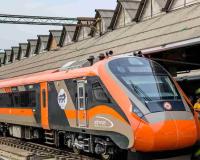
The Ministry of Railways shared details of the project on Sunday, describing the Bharat-made bullet train as an important development in India's journey towards indigenous high-speed rail technology.
Railway Minister Ashwini Vaishnaw visited the BEML facility to review the manufacturing progress and witnessed a critical structural safety assessment known as the 'squeeze test'.
The test is designed to evaluate the structural strength, rigidity and dimensional stability of the train's car body under controlled compressive and tensile forces. These assessments are essential to verify whether the vehicle structure can withstand the mechanical stresses encountered during operation.
The B28 bullet train is being developed with a maximum test speed of 280 km/h. According to the information shared, the first trainset is expected to roll out by the end of this year or early next year, although the final timeline will depend on the manufacturing and testing schedule.
The proposed inaugural run is tentatively planned for August 15, 2027, on the 97-km Surat-Vapi section of the Mumbai-Ahmedabad corridor. Before entering passenger service, the train will have to complete the required testing, certification and safety clearances.
The development of B28 reflects a strategic shift towards domestic manufacturing of high-speed trains. India had earlier considered procuring Japanese E5 Shinkansen trainsets for the Mumbai-Ahmedabad project. However, concerns over high costs and potential delivery delays reportedly contributed to the decision to pursue an indigenous alternative.
Japan is still expected to provide two Shinkansen trainsets, the E5 and E3, for testing purposes, according to the information available. These trains could support technical evaluation and provide valuable inputs for India's high-speed rail development programme.
The indigenous train is expected to offer a more economical alternative to imported Shinkansen trainsets. Its development could also strengthen domestic expertise in rolling stock design, manufacturing, testing and maintenance, while creating opportunities for Indian suppliers across the railway manufacturing ecosystem.
The 508-km Mumbai-Ahmedabad High-Speed Rail corridor is India's first bullet train project and is being implemented with Japanese technical and financial cooperation. The project is expected to introduce high-speed rail services in India and establish the technological and operational foundation for future corridors.
The entire corridor is currently targeted for completion around 2029-30. The proposed Surat-Vapi inaugural run in 2027 would mark an earlier operational milestone for the project.
Vaishnaw also indicated that the proposed Bengaluru-Pune high-speed rail corridor could be among the next projects considered for India's expanding bullet train network. While detailed project parameters and timelines are yet to be established, the indication points towards a broader national vision for high-speed connectivity.
With B28 progressing through manufacturing and structural safety assessments, India's indigenous high-speed rail ambitions are moving towards a critical testing phase. The train's rollout, certification and proposed inaugural run will be key milestones in the country's effort to develop domestic capabilities for advanced railway technology.
About The Author







Comment List