
.jpg)
The agreement is expected to resolve major social security concerns faced by Sri Lankan workers employed in India by preventing them from making duplicate contributions to two separate social security systems.
The fourth round of bilateral discussions between the Governments of Sri Lanka and India on the proposed agreement concluded successfully in Colombo on July 21 and 22, 2026. During the talks, both sides reached an agreement on outstanding issues related to the draft agreement and finalised clauses to be included in the pact.
Negotiations on the proposed Social Security Agreement began nearly a decade ago, with the latest discussions marking a significant development towards strengthening social security protection for workers from both countries.
Under the proposed arrangement, eligible Indian workers temporarily employed in Sri Lanka will receive similar benefits, allowing them to continue contributing to their respective social security systems without being required to make additional contributions in the host country.
The agreement is also expected to provide relief to Sri Lankan workers who have previously contributed to India’s Employees’ Provident Fund but have been unable to withdraw their accumulated savings.
Under existing Indian EPF regulations, members are eligible to withdraw their benefits after reaching the age of 58. However, many Sri Lankan workers have experienced difficulties accessing their funds due to practical challenges, including issues related to maintaining or operating Indian bank accounts.
Once the agreement comes into force, eligible Sri Lankan workers will be able to access their accumulated EPF benefits through an established mechanism.
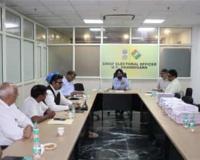
The Indian delegation at the discussions was led by P. S. Gangadhar, while the Sri Lankan delegation was headed by Commissioner General of Labour Nadeeka Wataliyadda. Senior officials from the Ministry of Labour, Ministry of Foreign Affairs, Foreign Employment and Tourism participated in the negotiations.
The proposed Social Security Agreement between Sri Lanka and India is expected to establish a structured mechanism for protecting the social security interests of workers employed across both countries while eliminating challenges arising from dual contribution requirements.
About The Author




.jpg)
.jpg)




Comment List