

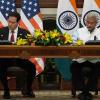
External Affairs Minister S. Jaishankar and US Secretary of State Marco Rubio signed the “Framework on Securing of Supply in the Mining and Processing of Critical Minerals and Rare Earths” in New Delhi at the conclusion of Rubio’s four-day visit to India. The agreement formalises a partnership spanning the entire supply chain, from mining and processing to recycling facilities, while opening the door to joint financing and investment arrangements.
The deal comes amid escalating global concern over critical mineral supply chains. China currently controls the processing of a significant share of the world’s rare earth elements, which are indispensable for semiconductors, electric vehicle batteries, fighter jet components, and advanced telecommunications equipment. Washington and New Delhi have been urgently seeking to build alternative supply networks, and Tuesday’s framework places their bilateral partnership at the centre of that strategic effort.
“This is not a peripheral trade arrangement,” a senior Indian government official familiar with the negotiations said. “It is a strategic realignment of where these materials come from, who processes them, and who benefits.”
The framework traces its origins to the PM Modi-Trump summit in Washington in February 2025, where the two leaders identified secure critical mineral supply chains as a shared strategic priority. Tuesday’s signing transforms that political understanding into an operational architecture by creating a legal and institutional basis for joint ventures, co-investment, and coordinated export strategies.
Rubio’s visit, his first to India as Secretary of State, extended beyond minerals and rare earths. Discussions between the two sides covered defence cooperation, trade negotiations, and regional security, even as bilateral tensions over tariffs continued to simmer in the background. However, the minerals framework emerged as the defining outcome of the visit, delivering a concrete strategic achievement for both governments.
The agreement also integrates into a broader network of initiatives developed by the two countries since early 2026. In February, India became a signatory to the US-led Pax Silica initiative, a multilateral effort aimed at securing silicon and related mineral supply chains. During the same month, Jaishankar attended a foreign ministers’ meeting on critical minerals convened by Rubio in Washington. India and the United States are also active partners under the Forum on Resource Geostrategic Engagement, known as FORGE.
India enters the partnership with substantial mineral reserves, including lithium, cobalt, and titanium, while intensifying efforts to attract foreign investment for domestic processing capacity, currently considered its weakest link. The United States contributes financing mechanisms, technology, and market access, strengthening the operational viability of the agreement.
Industry analysts noted that translating the framework into functioning mining and processing operations will require sustained follow-through from both governments, particularly in navigating India’s historically complex environmental clearance processes.
Despite those challenges, Rubio’s departure from New Delhi with a signed agreement underscored the accelerating momentum in India-US relations. The pact signals a deeper strategic alignment between the two nations as they seek to shape a post-China-dependent global supply order for critical minerals and rare earths.
About The Author










Comment List