

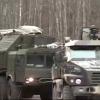
According to a statement released by the Saudi-led coalition through the state-run Saudi Press Agency, the strikes were launched after two vessels arrived in Mukalla from Fujairah on the United Arab Emirates’ eastern coast. The coalition alleged that the ships had disabled their tracking systems and unloaded large quantities of weapons and armored combat vehicles intended for the Southern Transitional Council (STC), a powerful separatist group seeking to restore an independent South Yemen.
Saudi officials said the weapons posed an “imminent threat” and represented a dangerous escalation that could undermine security and stability in the region. The coalition said it carried out a limited overnight airstrike aimed specifically at the offloaded weapons and vehicles, stressing that the timing was chosen to avoid civilian casualties and collateral damage. No immediate information was available on casualties, and it was unclear whether forces other than Saudi Arabia participated in the operation.
The United Arab Emirates did not immediately acknowledge the strike or respond to requests for comment. The STC’s affiliated AIC satellite news channel confirmed that airstrikes had taken place in Mukalla but offered no further details.
Security analysts believe one of the targeted vessels was a roll-on, roll-off ship identified as the Greenland, flagged in St. Kitts. Ship-tracking data showed the vessel docked in Fujairah on December 22 before arriving in Mukalla on Sunday. A second ship mentioned in the Saudi statement has not yet been identified. Social media footage circulating after the ship’s arrival appeared to show newly delivered armored vehicles moving through the city, visuals later echoed by surveillance-style footage aired on Saudi state television.
Mohammed al-Basha, a Yemen analyst and founder of the risk advisory firm Basha Report, said the strike likely signals a carefully calibrated escalation. He noted that while the STC may respond by consolidating its control on the ground, Saudi Arabia’s control of Yemeni airspace could limit future weapons transfers from the UAE to separatist forces following the attack on the port.
Mukalla lies in Yemen’s eastern Hadramout governorate, an area the STC has recently moved to seize. The city sits roughly 480 kilometers northeast of Aden, which has served as the interim seat of Yemen’s internationally recognized, anti-Houthi authorities since the Houthis captured the capital, Sana’a, in 2014.
The Mukalla strike follows earlier Saudi airstrikes last Friday that targeted STC positions in what analysts described as a warning to halt the group’s advance into Hadramout and neighboring Mahra. In recent days, STC forces have pushed out units aligned with the Saudi-backed National Shield Forces, another faction fighting the Iranian-backed Houthi rebels.
The separatists’ actions have been accompanied by growing displays of South Yemen’s former flag, reflecting renewed calls for secession. South Yemen existed as an independent state from 1967 until its unification with the north in 1990, and demonstrations in support of renewed independence have intensified across southern regions.
The latest confrontation highlights widening fault lines between Saudi Arabia and the UAE—close partners and fellow OPEC members that have nonetheless backed competing forces in Yemen and increasingly vie for regional influence and economic clout. As Yemen’s war enters its second decade, the strikes in Mukalla suggest that internal divisions within the anti-Houthi camp may further complicate efforts to stabilize the country and the wider Red Sea region.
About The Author






Comment List