

In a politically charged moment for Bangladesh, Bangladesh Nationalist Party (BNP) acting chairman Tarique Rahman on Tuesday urged citizens across religious, political and social lines to unite in restoring peace and stability, as the country grapples with unrest following the killing of prominent youth leader Sharif Osman Hadi.
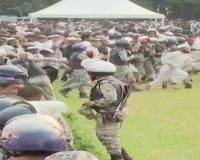
Rahman’s appeal came just hours after he arrived in Dhaka, marking his return to the country after 17 years in exile. He proceeded directly from the airport to a massive rally, where thousands of supporters gathered amid heightened political tension and uncertainty.
Addressing the crowd, Rahman emphasized the need for collective responsibility in maintaining law and order, regardless of political affiliation or religious belief. He called on people from all walks of life—including non-partisan citizens—to work together to stabilize the nation at a time of deep crisis.
The return of the 60-year-old BNP leader comes against the backdrop of widespread unrest triggered by the murder of Sharif Osman Hadi, a youth leader who had become the public face of last year’s protests that ultimately led to the collapse of the Sheikh Hasina-led government. The killing has intensified political instability and raised concerns over public safety across the country.
Rahman, the son of former prime minister Khaleda Zia, is widely viewed as a leading contender for the prime ministership ahead of the next general election. In his address, he invoked the words of US civil rights icon Martin Luther King Jr. to underline his vision for Bangladesh, stating that he has a clear plan focused on public welfare, national development and long-term transformation.
He told supporters that implementing this vision would require the collective backing of the nation, expressing confidence that, with public support, his plan could be realized. Rahman reiterated his commitment to building a country where people of all faiths and backgrounds can live without fear.
Highlighting Bangladesh’s diversity, he said the nation is home to communities from both the hills and the plains, including Muslims, Hindus, Buddhists and Christians. He stressed the goal of creating a safe environment where every citizen—women, men and children—can leave their homes securely and return safely.
Rahman’s call for unity also comes at a complex political juncture. Jamaat-e-Islami, which was a coalition partner of the BNP during its 2001–2006 tenure in power, has now emerged as a key rival ahead of the upcoming polls. This shift follows the interim government’s decision to bar the Awami League from participating in elections under the country’s stringent Anti-Terrorism Act.
Before concluding his public appearance, Rahman asked supporters to pray for his ailing mother, Khaleda Zia, the BNP chairperson, whom he met after leaving the rally venue.
Rahman’s dramatic homecoming and message of unity signal a pivotal moment in Bangladesh’s evolving political landscape, as the nation stands at a crossroads between prolonged instability and the possibility of a reset driven by inclusive leadership and public consensus.
About The Author


.jpg)




Comment List