

Four decades ago, Xi was a district-level official in northern China when he travelled to the United States to gather information. He spent several days in Iowa, learning about farming, visiting agricultural sites and staying with a local family.
Chinese state media has repeatedly highlighted Xi’s stay at the family’s home and his friendship with Terry Branstad, who was governor of Iowa at the time. Branstad later became the US ambassador to China during Donald Trump’s presidency. Through the episode, Chinese state media sought to highlight Xi’s personal links with the United States.
US-China relations today are dramatically different. The two countries are competing for global influence, imposing tariffs on each other, restricting technology and intensifying competition in the military sphere.
Xi, now 73, is no longer a little-known local official. During nearly 14 years as China’s leader, he has strengthened China’s position on the world stage.
Born in Beijing in 1953, Xi is the sixth child of Communist revolutionary Xi Zhongxun. His father helped establish the People’s Republic of China and later became a senior Communist Party leader and vice premier.
As a child, Xi attended prestigious schools and enjoyed access to facilities that were unavailable to most families at the time.
But politics soon turned against his family.
In the early 1960s, Xi’s father was accused of belonging to an “anti-party” faction. He was expelled from the party and sent to work at a factory in the countryside.
Xi was treated as the son of a man labelled “counter-revolutionary”. During his teenage years, he was forcibly sent to a re-education centre. At the time, leader Mao Zedong had urged young people to go to the countryside and learn from farmers. As a result, 15-year-old Xi joined millions of other young people sent from cities to rural areas.
In a 2004 interview, he recalled that journey, saying, “Everyone was crying on the train. Only I was smiling... If I could not get out of there, I would have been crying too. If I had stayed there, I do not know whether I would be alive today.”
Xi arrived in Liangjiahe, a mountainous village in western China’s Shaanxi province. He spent seven years there living in a “yaodong”, a cave-like dwelling built into a hillside. He farmed, carried manure and dug trenches.
Recalling his time there, he said, “Pickled vegetables became my favourite food. Even today, I miss that time very much.”
The workload left him “shocked”. In the beginning, he also struggled with hunger and fleas. The short period allowed to smoke a cigarette before lunch provided some relief.
Xi left the village at the age of 22 and studied chemical engineering at Tsinghua University, one of China’s leading educational institutions.
After completing his studies, he worked as a local official away from Beijing. He served in coastal provinces including Fujian and Zhejiang. After China opened its economy in the 1980s, these provinces became some of the country’s wealthiest regions.
Following Mao’s death, Xi’s father returned to politics. This helped Xi secure positions in the central government and the military, where he built relationships with several party officials.
Many of those officials later became part of his trusted leadership group.
Xi married Ke Lingling in 1979. It was his first marriage. She was the daughter of China’s former ambassador to Britain. The couple divorced three years later.
A mutual friend later introduced Xi to his second and current wife, Peng Liyuan. Peng was a military folk singer who was already highly famous in China. She performed on television programmes broadcast every Lunar New Year that were watched by hundreds of millions of people.
During the 1980s and 1990s, many Chinese people knew Peng better than they knew her husband, who was then a provincial official.
Peng frequently accompanies Xi on foreign trips, breaking with the traditionally low-profile role of Chinese first ladies.
Their daughter and only child, Xi Mingze, was born in 1992. Little information is publicly available about her. It is known that she studied at Harvard University in the United States.
In 2007, after briefly serving as Shanghai’s top leader, Xi joined the Politburo Standing Committee, China’s highest decision-making body.
Five years later, he replaced Hu Jintao as leader of the Communist Party.
After becoming China’s leader, Xi introduced changes to the country’s economic and political systems that few people had expected.
During his 14 years in power, China’s confidence has steadily increased.
Through initiatives such as the Belt and Road Initiative, Xi expanded China’s influence in other countries. At the same time, he sought to position Beijing as the voice of the Global South.
Relations with several major democracies became more strained during the same period. Tensions increased in the South China Sea, pressure on Taiwan intensified and competition with the United States accelerated.
Another defining feature of Xi’s rule has been increased political control inside China.
Under Xi, China has placed greater emphasis than before on security and political stability. Measures have been taken in places including Xinjiang, Tibet and Hong Kong. Xi’s supporters say these steps restored order, while critics argue that they significantly reduced civil liberties.
Xi has also promoted a political ideology bearing his name. It is known as “Xi Jinping Thought on Socialism with Chinese Characteristics for a New Era”. Before Xi, neither of China’s two previous leaders had their name incorporated into their ideology in this way.
Xi also removed the constitutional limit on presidential terms, opening the way for him to remain in office beyond two terms.
Chinese state media portrays Xi as a serious figure. But his lighter side has occasionally emerged.
He has spoken about his love of football. He also jokingly expressed his disappointment to the prime minister of Thailand over the performance of China’s men’s football team.
He drank beer with former British Prime Minister David Cameron. When presenting the South Korean president with a Xiaomi phone made in China, Xi joked that the recipient should check whether the device had a “backdoor” before accepting it.
Xi’s relationships with foreign leaders have changed over time, reflecting China’s foreign policy priorities.
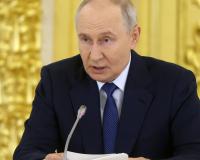
Xi has no closer relationship with another foreign leader than the one he has with Russia’s Vladimir Putin. Since Xi came to power, the two have met more than 40 times. Xi has also described Putin as his “closest confidant”.
Xi’s relationship with Trump has been more complicated. Despite launching a trade war with China, Trump has often spoken warmly about Xi, calling him a friend and praising his political strength.
Xi also initially placed considerable emphasis on building a personal relationship with Indian Prime Minister Narendra Modi. The two held meetings without formal agendas and sought to project cooperation between the two major Asian countries. But after the deadly border clashes in 2020, relations between the two countries deteriorated to their worst level in several decades.
Unlike leaders known for personal charm or sudden decisions, Xi rarely places personal relationships above national interests.
When Xi arrives in Washington, DC, again this week, he will not be the curious district official who once visited Iowa’s farms. He will arrive as a leader whose role has become central to the politics of the 21st century.
About The Author










Comment List