

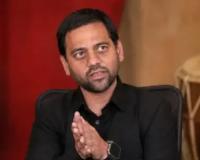
Calling Sahil Wakode’s death unfortunate, Raj Thackeray said addressing those systemic flaws would be the real tribute to Sahil and to many others who have died by suicide after being unable to withstand pressure. He made the remarks in a social media post while commenting on the controversy surrounding the IIT Bombay student’s death.
At IIT Bombay, Sahil Wakode, 20, died by suicide in an extremely unfortunate incident. The IIT administration initially alleged that he had used a mobile phone and ChatGPT during an examination. The administration later acknowledged that making the allegation public before the investigation was complete was inappropriate and apologised.
At the same time, Sahil’s family alleged caste-based harassment. A case has been registered on the basis of those allegations and an investigation is underway. Professors involved in the matter have also presented their side.
Raj Thackeray said that amid all these developments, there appeared to be little discussion about why a young student felt compelled to choose suicide. He said that if a student is found engaging in malpractice during an examination, it is the responsibility of professors to stop it and take action according to the rules. However, he said it was not appropriate to declare the deceased student a criminal before the allegations were established.
At the same time, Raj Thackeray said that professors should also not be held guilty before an inquiry into allegations of caste-based harassment is completed. He questioned why the focus had shifted to caste instead of examining why a 20-year-old student, after a particular incident, felt that all paths in his life had come to an end.
Raj Thackeray said he had repeatedly stated in his speeches that caste had spread extensively in Maharashtra after 2000. According to him, students who sit together in school have increasingly begun identifying each other by caste, while employees who had shared meals together for years have also started looking at one another through the lens of caste.
He said the situation had become so toxic that it had now reached IIT. Referring to Pandit Jawaharlal Nehru’s description of IITs as the “temples of modern India”, Raj Thackeray said it was unfortunate that after a student had died, the caste dimension of the incident was being pushed forward instead of the fact that a fellow student had been lost.
He also said that IITs and competitive examinations before IIT were increasingly becoming life-threatening in terms of pressure on students. According to him, lakhs of students compete for a few hundred seats, and after selection, students face the burden of studies and the pressure of what will happen during campus placements.
Raj Thackeray further said that whether at IIT or IIM, students were no longer getting the kind of high salaries in campus placements that they received earlier. He said such depression was not limited to IIT students and that the pressure existed across society, from commerce and arts students to doctors and engineers.
According to Raj Thackeray, Sahil died by suicide amid this depression and pressure. He therefore questioned whether the focus should be on challenging and changing an education system that has become completely dysfunctional or on identifying the caste of the student who died by suicide and the person who questioned him.
Raj Thackeray also said the issue was not about which government was in power. He argued that over the past 30 to 40 years, in the pursuit of commercialising education, enormous damage had been done to the Indian education system and that fundamental changes were necessary.
He said that when it appeared that the recent Gen Z movement could become the beginning of such a change, the Sahil Wakode incident came to the fore. Raj Thackeray appealed to students to continue their movement in the direction of demanding solutions to systemic flaws, saying their movement had received a response from across the country because its central demand was to address problems within the system.
He said that if the movement continued along those lines, the government would have to answer several questions and take action. He questioned whether the government wanted to do so, adding that if it did, it would be welcome, but if it did not, caste and religion were readily available as powerful tools to divert attention from the issue.
“Once caste and religion are brought in, it becomes easy to divert the subject,” Raj Thackeray said, urging students not to get entangled in such matters.
He also referred to demands raised by IIT Bombay students, including a counselling system, round-the-clock availability of psychiatrists, transparency in whether complaints were genuinely being resolved and a system under which students would not be pushed into severe distress when disciplinary action was taken for violations of rules.
Raj Thackeray said the students’ movement should remain focused on these issues. If the protest continued with the objective of correcting flaws in the education system, he said, the government and administration would have to provide answers and take action.
He further said that people interested in power politics were fond of the issue of caste and appealed to students not to get trapped in it. Instead, he urged them to demonstrate their opposition to politicians who, in his view, were attempting to divert attention from the original issue.
Raj Thackeray said it appeared that caste and religion were being used as tools to prevent questions or protests over shortcomings in the government system, particularly at a time when there had been a movement demanding the resignation of the Union Education Minister.
He warned students against allowing such issues to create differences and divisions among them, whether at IIT or on any other campus.
Raj Thackeray reiterated that Sahil Wakode’s death was unfortunate and said what happened was linked to flaws created within the education system itself. According to him, working to address those flaws would be the true tribute to Sahil Wakode and to the many others who have died by suicide after being unable to withstand the pressure.
About The Author







Comment List