

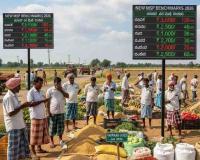
The pulse sector presents the most striking contrast. Arhar (Tur) has emerged as the season’s frontrunner, with market prices consistently outperforming the MSP of ₹8,000 per quintal. In several districts, the commodity has touched highs of ₹8,627, driven by steady demand and substantial arrival volumes exceeding 880 metric tonnes. Conversely, the Bengal Gram market is signaling distress. Despite a set MSP of ₹5,650, average market realizations have dipped as low as ₹5,525, sparking calls from the state administration for urgent central intervention and the commencement of procurement under the Price Support Scheme (PSS) to prevent further value erosion.
The fiber and oilseed segments are also witnessing significant price Discovery. Cotton, a vital commercial crop for the state, is currently trading in a volatile range; while some high-quality arrivals have fetched up to ₹8,220 per quintal, the average market price of ₹7,758 sits uncomfortably close to the MSP of ₹7,710. Meanwhile, Groundnut remains a rare bright spot for oilseed farmers, maintaining a healthy market average of ₹8,110, comfortably shielding growers from the ₹7,263 support floor. In the cereal category, Paddy (Common) continues to see heavy arrivals, though market prices of ₹2,541 suggest a tightening margin over the MSP of ₹2,369.
As the harvest season enters its peak, the disparity between administrative price-fixing and actual trade value highlights the ongoing structural challenges within the agricultural supply chain. While the government’s 1.5-times cost-of-production formula aims to provide a safety net, the lack of immediate procurement infrastructure for lagging crops like Bengal Gram often forces smaller farmers into distress sales. The coming weeks will be a critical litmus test for Karnataka’s market regulators as they balance the influx of produce with the need to maintain price stability for the state’s agrarian backbone.
About The Author







Comment List